
 There is a limit to what we can accomplish with one-size-fits-all
design. For one thing, by trying to be everything to everyone,
many products become bloated and ultimately lose a lot of their
usefulness. The
Wenger 16999 Swiss Army Knife (see image to the right)
provides an amusing illustration of this point. But the problem
is even deeper than feature creep and bloat. One-size-fits-all
design inadvertently, but inevitably leads to discrimination: User
interfaces designed with able-bodied users in mind, even if they
are technically `accessible', are inefficient for many impaired
people to use not because of any inherent barriers to efficient
interaction, but because of the mismatch between the user's
effective abilities and the designer's assumptions. Interfaces
designed with Western aesthetic sensibilities in mind, will appear
less trustworty, engaging or usable to people from other cultures
potentially causing them not to take advantage of valuable digital
resources. As
our study of Doodle users shows, people in
different cultures perform social decision making tasks
differently.
There is a limit to what we can accomplish with one-size-fits-all
design. For one thing, by trying to be everything to everyone,
many products become bloated and ultimately lose a lot of their
usefulness. The
Wenger 16999 Swiss Army Knife (see image to the right)
provides an amusing illustration of this point. But the problem
is even deeper than feature creep and bloat. One-size-fits-all
design inadvertently, but inevitably leads to discrimination: User
interfaces designed with able-bodied users in mind, even if they
are technically `accessible', are inefficient for many impaired
people to use not because of any inherent barriers to efficient
interaction, but because of the mismatch between the user's
effective abilities and the designer's assumptions. Interfaces
designed with Western aesthetic sensibilities in mind, will appear
less trustworty, engaging or usable to people from other cultures
potentially causing them not to take advantage of valuable digital
resources. As
our study of Doodle users shows, people in
different cultures perform social decision making tasks
differently.
I argue that personalized and adaptive user interfaces are one way to accommodate these individual differences and, thus, to provide more equitable access to digital resources.

 Projects
Sub-theme: Designing and evaluating adaptive and personalized user interfaces
Adaptive Click and Cross: Adapting to Both Abilities and Task to Improve Performance of Users With Impaired Dexterity
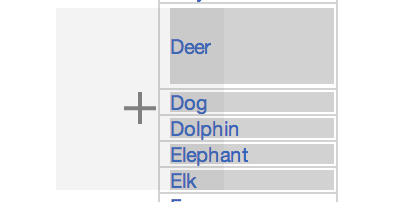 Adaptive Click-and-Cross, an interaction technique for computer users
with impaired dexterity. This technique combines three "adaptive"
approaches that have appeared separately in previous literature:
adapting the user's abilities to the interface (i.e., by modifying the
way that the cursor works), adapting the user interface to the user's
abilities (i.e., by modifying the user interface through enlarging
items), and adapting the user interface to the user's task (i.e., by
moving frequently or recently used items to a convenient location).
Adaptive Click-and-Cross combines these three adaptations to minimize
each approach's shortcomings, selectively enlarging items predicted to
be useful to the user while employing a modified cursor to enable
access to smaller items.
Adaptive Click-and-Cross, an interaction technique for computer users
with impaired dexterity. This technique combines three "adaptive"
approaches that have appeared separately in previous literature:
adapting the user's abilities to the interface (i.e., by modifying the
way that the cursor works), adapting the user interface to the user's
abilities (i.e., by modifying the user interface through enlarging
items), and adapting the user interface to the user's task (i.e., by
moving frequently or recently used items to a convenient location).
Adaptive Click-and-Cross combines these three adaptations to minimize
each approach's shortcomings, selectively enlarging items predicted to
be useful to the user while employing a modified cursor to enable
access to smaller items.
Louis Li and Krzysztof Z. Gajos. Adaptive Click-and-cross: Adapting to Both Abilities and Task Improves Performance of Users with Impaired Dexterity. In Proceedings of the 19th International Conference on Intelligent User Interfaces, IUI '14, pages 299–304, New York, NY, USA, 2014. ACM.
[Abstract, BibTeX, etc.]
Louis Li. Adaptive Click-and-cross: An Interaction Technique for Users with Impaired Dexterity. In Proceedings of the 15th International ACM SIGACCESS Conference on Computers and Accessibility, ASSETS '13, pages 79:1-79:2, New York, NY, USA, 2013. ACM.
[Abstract, BibTeX, etc.]
Exploring The Design Space Of Adaptive User Interfaces
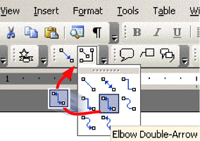 For decades, researchers have presented different adaptive user
interfaces and discussed the pros and cons of adaptation on task
performance and satisfaction. Little research, however, has been
directed at isolating and understanding those aspects of adaptive
interfaces which make some of them successful and others not. We have
conducted several laboratory studies to systematically isolate some of
the design and contextual factors that affect the impact of adaptation
on users' performance and satisfaction. The results of these studies combined with the recent work of others, provide an initial characterization of the design space of adaptive graphical user interfaces.
For decades, researchers have presented different adaptive user
interfaces and discussed the pros and cons of adaptation on task
performance and satisfaction. Little research, however, has been
directed at isolating and understanding those aspects of adaptive
interfaces which make some of them successful and others not. We have
conducted several laboratory studies to systematically isolate some of
the design and contextual factors that affect the impact of adaptation
on users' performance and satisfaction. The results of these studies combined with the recent work of others, provide an initial characterization of the design space of adaptive graphical user interfaces.
SPRWeb: Preserving Subjective Responses to Website Colour Schemes through Automatic Recolouring
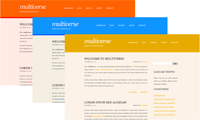 Colors are an important part of user experiences on the Web. Color schemes influence the aesthetics, first impressions and long-term engagement with websites. However, five percent of people perceive a subset of all colors because they have color vision deficiency (CVD), resulting in an unequal and less-rich user experience on the Web. Traditionally, people with CVD have been supported by recoloring tools that improve color differentiability, but do not consider the subjective properties of color schemes while recoloring. To address this, we developed SPRWeb, a tool that recolors websites to preserve subjective responses and improve color differentiability, thus enabling users with CVD to have similar online experiences. SPRWeb is the first tool to automatically preserve the subjective and perceptual properties of website color schemes thereby equalizing the color-based web experience for people with CVD.
David R. Flatla, Katharina Reinecke, Carl Gutwin, and Krzysztof Z. Gajos. SPRWeb: preserving subjective responses to website colour schemes through automatic recolouring. In Proceedings of the SIGCHI Conference on Human Factors in Computing Systems, CHI '13, pages 2069-2078, New York, NY, USA, 2013. ACM.
Best Paper Award
[Abstract, BibTeX, etc.]
SUPPLE: Automatically Generating User Interfaces
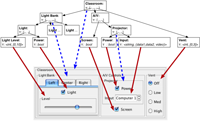 SUPPLE is an application- and device-independent system that automatically
generates user interfaces for a wide variety of display devices.
SUPPLE uses decision-theoretic optimization to render an interface
from an abstract functional specification and an interchangeable
device model. SUPPLE can use information from the user
model to automatically adapt user interfaces to different tasks
and work styles while also prividing extensive customization
mechanisms that allow for modifications to the appearance,
organization and navigational structure of the user interface.
SUPPLE is an application- and device-independent system that automatically
generates user interfaces for a wide variety of display devices.
SUPPLE uses decision-theoretic optimization to render an interface
from an abstract functional specification and an interchangeable
device model. SUPPLE can use information from the user
model to automatically adapt user interfaces to different tasks
and work styles while also prividing extensive customization
mechanisms that allow for modifications to the appearance,
organization and navigational structure of the user interface.
Krzysztof Z. Gajos, Amy Hurst, and Leah Findlater. Personalized dynamic accessibility. interactions, 19(2):69-73, March 2012.
[Abstract, BibTeX, Authorizer, etc.]
Krzysztof Z. Gajos, Daniel S. Weld, and Jacob O. Wobbrock. Automatically generating personalized user interfaces with Supple. Artificial Intelligence, 174:910-950, 2010.
[Abstract, BibTeX, etc.]
Krzysztof Z. Gajos, Jacob O. Wobbrock, and Daniel S. Weld. Improving the performance of motor-impaired users with automatically-generated, ability-based interfaces. In CHI '08: Proceeding of the twenty-sixth annual SIGCHI conference on Human factors in computing systems, pages 1257-1266, New York, NY, USA, 2008. ACM.
Best Paper Award
[Abstract, BibTeX, Video, Authorizer, etc.]
Krzysztof Z. Gajos. Automatically Generating Personalized User Interfaces. PhD thesis, University of Washington, Seattle, WA, USA, 2008.
[Abstract, BibTeX, etc.]
[Abstract, BibTeX, etc.]
Krzysztof Z. Gajos, Jacob O. Wobbrock, and Daniel S. Weld. Automatically generating user interfaces adapted to users' motor and vision capabilities. In UIST '07: Proceedings of the 20th annual ACM symposium on User interface software and technology, pages 231-240, New York, NY, USA, 2007. ACM Press.
[Abstract, BibTeX, Slides, Video, Authorizer, etc.]
Krzysztof Gajos, David Christianson, Raphael Hoffmann, Tal Shaked, Kiera Henning, Jing J. Long, and Daniel S. Weld. Fast and Robust Interface Generation for Ubiquitous Applications. In UbiComp 2005: Ubiquitous Computing, volume 3660 of Lecture Notes in Computer Science, pages 37-55, Berlin / Heidelberg, 2005. Springer.
[Abstract, BibTeX, Slides, etc.]
Krzysztof Gajos and Daniel S. Weld. Preference elicitation for interface optimization. In UIST '05: Proceedings of the 18th annual ACM symposium on User interface software and technology, pages 173-182, New York, NY, USA, 2005. ACM Press.
[Abstract, BibTeX, Slides, Authorizer, etc.]
Krzysztof Gajos, Anthony Wu, and Daniel S. Weld. Cross-Device Consistency in Automatically Generated User Interfaces. In Proceedings of Workshop on Multi-User and Ubiquitous User Interfaces (MU3I'05), 2005.
Krzysztof Gajos and Daniel S. Weld. SUPPLE: automatically generating user interfaces. In IUI '04: Proceedings of the 9th international conference on Intelligent user interface, pages 93-100, New York, NY, USA, 2004. ACM Press.
[Abstract, BibTeX, Authorizer, etc.]
ARNAULD: Preference Elicitation For Interface Optimization
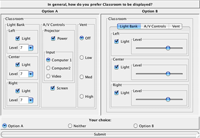 Recent years have revealed a trend towards
increasing use of optimization as a method for automatically designing
aspects of an interface's interaction with the user. In most cases,
this optimization may be thought of as decision-theoretic --
the objective is to minimize the expected cost of a user's
interactions or (equivalently) to maximize the user's expected
utility. While decision-theoretic optimization provides a powerful,
flexible, and principled approach for these systems, the quality of
the resulting solution is completely dependent on the accuracy of the
underlying utility or cost function. Unfortunately, determining the
correct utility function is a complex, time-consuming, and error-prone
task. While domain-specific learning techniques have been used
occasionally, most practitioners parameterize the utility function and
then engage in a laborious and unreliable process of hand-tuning.
Recent years have revealed a trend towards
increasing use of optimization as a method for automatically designing
aspects of an interface's interaction with the user. In most cases,
this optimization may be thought of as decision-theoretic --
the objective is to minimize the expected cost of a user's
interactions or (equivalently) to maximize the user's expected
utility. While decision-theoretic optimization provides a powerful,
flexible, and principled approach for these systems, the quality of
the resulting solution is completely dependent on the accuracy of the
underlying utility or cost function. Unfortunately, determining the
correct utility function is a complex, time-consuming, and error-prone
task. While domain-specific learning techniques have been used
occasionally, most practitioners parameterize the utility function and
then engage in a laborious and unreliable process of hand-tuning.
Krzysztof Z. Gajos, Jacob O. Wobbrock, and Daniel S. Weld. Improving the performance of motor-impaired users with automatically-generated, ability-based interfaces. In CHI '08: Proceeding of the twenty-sixth annual SIGCHI conference on Human factors in computing systems, pages 1257-1266, New York, NY, USA, 2008. ACM.
Best Paper Award
[Abstract, BibTeX, Video, Authorizer, etc.]
Krzysztof Gajos and Daniel S. Weld. Preference elicitation for interface optimization. In UIST '05: Proceedings of the 18th annual ACM symposium on User interface software and technology, pages 173-182, New York, NY, USA, 2005. ACM Press.
[Abstract, BibTeX, Slides, Authorizer, etc.]
Sub-theme: Characterizing individual differences that interfaces ought to adapt to
Exploring Individual Differences in How People Use Adaptive User Interfaces
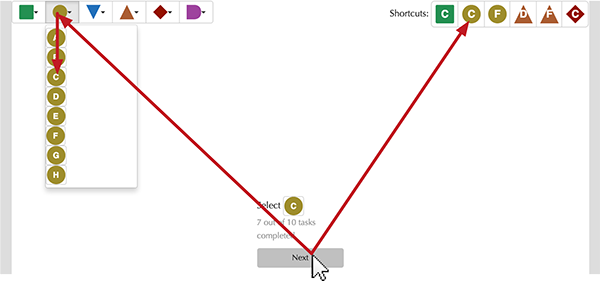 Past work, including ours, has shown that well-designed adaptive user interfaces can substantially improve people's performance and that people prefer those interfaces to the standard one-size-fits-all designs. But do all people benefit from adaptive user interfaces equally, or are some systematic differences causing some people to reap greater benefit than others. Our first study, which utilized the results from the Multitasking Test on Lab in the Wild has shown that people with high need for cognition utilize the adaptive feature fo adaptive user interfaces much more than those with low need for cognition. Also, introverts utilize the adaptive interface more than extroverts.
Krzysztof Z. Gajos and Krysta Chauncey. The Influence of Personality Traits and Cognitive Load on the Use of Adaptive User Interfaces. In Proceedings of the 22nd International Conference on Intelligent User Interfaces, IUI '17, pages 301–306, New York, NY, USA, 2017. ACM.
[Abstract, BibTeX, Blog post, Data, etc.]
Predicting Users' First Impressions of Website Aesthetics
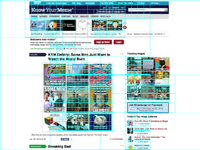 Users make lasting judgments about a website's appeal within a split second of seeing it for the first time. This first impression is influential enough to later affect their opinion of a site's usability and trustworthiness. In this project, we aim to automatically adapt website aesthetics to users' various preferences in order to improve this first impression. As a first step, we are working on predicting what people find appealing, and how this is influenced by their demographic backgrounds.
Katharina Reinecke and Krzysztof Z. Gajos. Quantifying Visual Preferences Around the World. In Proceedings of the SIGCHI Conference on Human Factors in Computing Systems, CHI '14, pages 11-20, New York, NY, USA, 2014. ACM.
[Abstract, BibTeX, etc.]
Katharina Reinecke, Tom Yeh, Luke Miratrix, Rahmatri Mardiko, Yuechen Zhao, Jenny Liu, and Krzysztof Z. Gajos. Predicting users' first impressions of website aesthetics with a quantification of perceived visual complexity and colorfulness. In Proceedings of the SIGCHI Conference on Human Factors in Computing Systems, CHI '13, pages 2049-2058, New York, NY, USA, 2013. ACM.
Honorable Mention
[Abstract, BibTeX, Data, etc.]
Cultural Differences in Time Perception and Group Decision-Making
 When discussing the effect of technology on culture, people often assume that the world is slowly homogenizing into a culture of Internet users, who share similar values and behavioral norms. Our analysis of the online scheduling behavior on Doodle argues against this hypothesis. In fact, event scheduling is not simply a matter of finding a mutually agreeable time, but a process that is shaped by social norms and values. And this can highly vary between countries. To investigate the influence of national culture on people's scheduling behavior we analyzed more than 1.5 million Doodle date/time polls from 211 countries. Our findings include that people around the world steer their availabilities towards those options that have good chances to reach consensus. But people from more group-oriented collectivist countries (e.g., India, China) seem to make a larger effort to reach mutual agreement than individualists (e.g., the US). We believe that increasing the awareness of such differences can help improve intercultural scheduling and support the acceptance of cultural differences as an interesting contribution to our lives.
Katharina Reinecke, Minh Khoa Nguyen, Abraham Bernstein, Michael Näf, and Krzysztof Z. Gajos. Doodle around the world: online scheduling behavior reflects cultural differences in time perception and group decision-making. In Proceedings of the 2013 conference on Computer supported cooperative work, CSCW '13, pages 45-54, New York, NY, USA, 2013. ACM.
[Abstract, BibTeX, Data, etc.]
Goal crossing vs area pointing for people with motor impairments
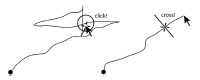 Prior work has highlighted the challenges faced by people with
motor impairments when trying to acquire on-screen targets using
a mouse or trackball. Two reasons for this are the difficulty of
positioning the mouse cursor within a confined area, and the
challenge of accurately executing a click. We hypothesize that
both of these difficulties with area pointing may be alleviated in a
different target acquisition paradigm called "goal crossing." In
goal crossing, users do not acquire a confined area, but instead
pass over a target line. Although goal crossing has been studied
for able-bodied users, its suitability for people with motor
impairments is unknown.
In our study, participants with motor impairments were faster with and preferred goal-crossing to area pointing.
This work provides the empirical
foundation from which to pursue the design of crossing-based
interfaces as accessible alternatives to pointing-based interfaces.
Prior work has highlighted the challenges faced by people with
motor impairments when trying to acquire on-screen targets using
a mouse or trackball. Two reasons for this are the difficulty of
positioning the mouse cursor within a confined area, and the
challenge of accurately executing a click. We hypothesize that
both of these difficulties with area pointing may be alleviated in a
different target acquisition paradigm called "goal crossing." In
goal crossing, users do not acquire a confined area, but instead
pass over a target line. Although goal crossing has been studied
for able-bodied users, its suitability for people with motor
impairments is unknown.
In our study, participants with motor impairments were faster with and preferred goal-crossing to area pointing.
This work provides the empirical
foundation from which to pursue the design of crossing-based
interfaces as accessible alternatives to pointing-based interfaces.
Jacob O. Wobbrock and Krzysztof Z. Gajos. Goal Crossing with Mice and Trackballs for People with Motor Impairments: Performance, Submovements, and Design Directions. ACM Trans. Access. Comput., 1(1):1-37, May 2008.
[Abstract, BibTeX, Authorizer, etc.]
Jacob O. Wobbrock and Krzysztof Z. Gajos. A comparison of area pointing and goal crossing for people with and without motor impairments. In Assets '07: Proceedings of the 9th international ACM SIGACCESS conference on Computers and accessibility, pages 3-10, New York, NY, USA, 2007. ACM.
[Abstract, BibTeX, Authorizer, etc.]

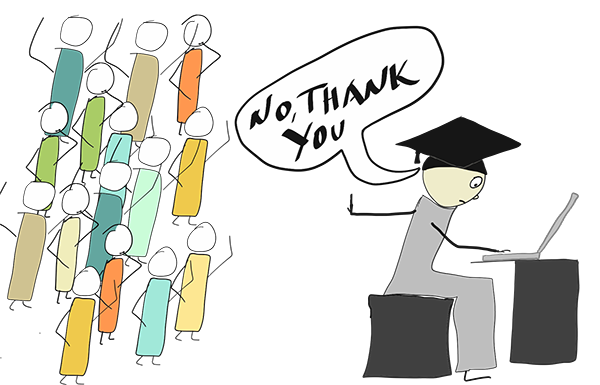 Many excellent crowdsourcing and citizen science tools exist to support research, but only a tiny fraction of researchers make use of them. Why? Our interviews with 18 researchers across disciplines revealed a number of differences between the assumptions underlying existing crowd- and citizen-powered platforms and the prevalent research practices and norms.
 We built on the information gap theory of curiosity to develop several interventions to motivate crowdworkers to persist longer on a task. Our experiment results show that curiosity interventions improve worker retention without degrading performance, and the magnitude of the effects are influenced by both the personal characteristics of the worker and the nature of the task.
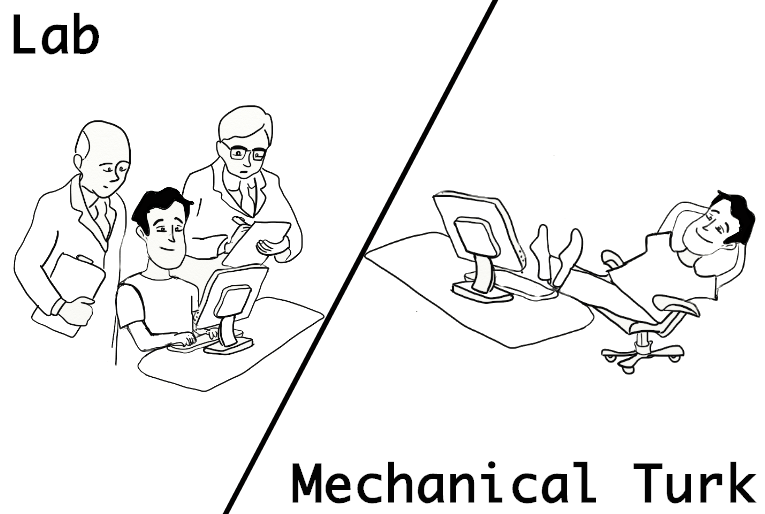 Can computer users be trusted to paricipate in user interface studies from the comfort of their home?
Can user interface researchers give up control over their subjects' environment? In this project we study whether we can use Amazon Mechanical Turk to conduct user interface studies reliably.
To do so, we replicated three previously known performance experiments, the "Bubble Cursor," the "Split Menus," and the "Split Interface," both in our lab and on Mechanical Turk.
We compared the lab with the online population in terms of performance metrics such as speed, accuracy, and consistency.
The results show that the Mechanical Turk participants perform just as well as the lab participants.
Can computer users be trusted to paricipate in user interface studies from the comfort of their home?
Can user interface researchers give up control over their subjects' environment? In this project we study whether we can use Amazon Mechanical Turk to conduct user interface studies reliably.
To do so, we replicated three previously known performance experiments, the "Bubble Cursor," the "Split Menus," and the "Split Interface," both in our lab and on Mechanical Turk.
We compared the lab with the online population in terms of performance metrics such as speed, accuracy, and consistency.
The results show that the Mechanical Turk participants perform just as well as the lab participants.
 Epidemiologic studies and public health biomonitoring rely on chemical exposure measurements in blood, urine, and other tissues, and in personal environments, such as homes. For many chemicals, the health implications of individual results are uncertain, and the sources and strategies to reduce exposure may not be known. Yet, a growing number of researchers consider it their ethical obligation to report the results back to their participants. In a project led by the
  Curio is intended to be a platform for crowdsourcing research tasks in sciences and humanities. The platform is designed to allow researchers to create and launch a new crowdsourcing project within minutes, monitor and control aspects of the crowdsourcing process with minimal effort. With Curio, we are exploring a brand new model of citizen science that significantly lowers the barrier of entry for scientists, developing new interfaces and algorithms for supporting mixed-expertise crowdsourcing, and investigating a variety of human computation questions related to task decomposition, incentive design and quality control.
 Various online platforms for different domains--ranging from social development to product design--have emerged as a space where people can share their ideas and get inspired by ideas from other people all over the world. The promise of these platforms is that the mix of perspectives and expertise among the participants should allow creative solutions to emerge in ways unimaginable in the lone-innovator or small-group settings. In practice, however, existing online innovation platforms accumulate large numbers of mundane and repetitive ideas rarely leading to valuable breakthroughs.
 We are developing tools and techniques for organic peer assessment, an approach where assessment occurs as a side effect of students performing activities, which they find intrinsically motivating. Our preliminary results, obtained in the context of a flipped classroom, show that the quality of the summative assessment produced by the peers matched that of experts, and we encountered strong evidence that our peer assessment implementation had positive effects on achievement.
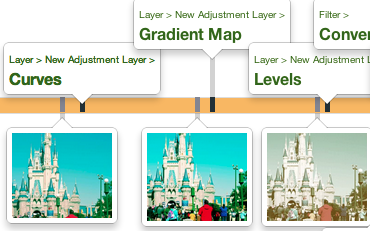 Rich knowledge about the content of educational videos can be used to enable more effective and more enjoyable learning experiences. We are developing tools that leverage crowds of learners to collect rich meta data about educational videos as a byproduct of the learners' natural interactions with the videos. We are also developing tools and techniques that use these meta data to improve the learning experience for others.
 PlateMate allows users to
take photos of their meals and receive estimates of food intake and
composition. Accurate awareness of this information is considered a
prerequisite to successful change of eating habits, but current
methods for food logging via self-reporting, expert observation, or
algorithmic analysis are time-consuming, expensive, or inaccurate.
PlateMate crowdsources nutritional analysis from photographs using
Amazon Mechanical Turk, automatically coordinating untrained workers
to estimate a meal's calories, fat, carbohydrates, and protein. To
make PlateMate possible, we developed the Management framework for
crowdsourcing complex tasks, which supports PlateMate's decomposition
of the nutrition analysis workflow. Two evaluations show that the
PlateMate system is nearly as accurate as a trained dietitian and
easier to use for most users than traditional self-reporting, while
remaining robust for general use across a wide variety of meal types.
PlateMate allows users to
take photos of their meals and receive estimates of food intake and
composition. Accurate awareness of this information is considered a
prerequisite to successful change of eating habits, but current
methods for food logging via self-reporting, expert observation, or
algorithmic analysis are time-consuming, expensive, or inaccurate.
PlateMate crowdsources nutritional analysis from photographs using
Amazon Mechanical Turk, automatically coordinating untrained workers
to estimate a meal's calories, fat, carbohydrates, and protein. To
make PlateMate possible, we developed the Management framework for
crowdsourcing complex tasks, which supports PlateMate's decomposition
of the nutrition analysis workflow. Two evaluations show that the
PlateMate system is nearly as accurate as a trained dietitian and
easier to use for most users than traditional self-reporting, while
remaining robust for general use across a wide variety of meal types.
 Well-conducted lecture demonstrations of natural phenomena improve students' engagement, learning and retention of knowledge. Similarly, laboratory modules that allow for genuine exploration and discovery of relevant concepts can improve learning outcomes. These pedagogical techniques are used frequently in natural sciences and engineering to teach students about phenomena in the physical world. But how might we conduct a lecture demonstration to demonstrate impact of extraneous cognitive load on performance? How might we design a lab, in which students explore how adding decorations to visualizations impacts the comprehension and memorability of visualizations?
We are developing tools, content and procedures to bring experiential learning techniques to social science and design-related courses that teach concepts related to human perception, cognition and behavior. Specifically, we are working to develop software technologies to enable rapid, large-scale and ethical online human-subjects experimentation in undergraduate design-related courses.
See the
Well-conducted lecture demonstrations of natural phenomena improve students' engagement, learning and retention of knowledge. Similarly, laboratory modules that allow for genuine exploration and discovery of relevant concepts can improve learning outcomes. These pedagogical techniques are used frequently in natural sciences and engineering to teach students about phenomena in the physical world. But how might we conduct a lecture demonstration to demonstrate impact of extraneous cognitive load on performance? How might we design a lab, in which students explore how adding decorations to visualizations impacts the comprehension and memorability of visualizations?
We are developing tools, content and procedures to bring experiential learning techniques to social science and design-related courses that teach concepts related to human perception, cognition and behavior. Specifically, we are working to develop software technologies to enable rapid, large-scale and ethical online human-subjects experimentation in undergraduate design-related courses.
See the 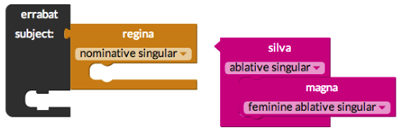 Learners commonly make errors in reading Latin, because they do not fully understand the impact of Latin's grammatical structure--its morphology and syntax--on a sentence's meaning. Synthesizing instructional methods used for Latin and artificial programming languages, Ingenium visualizes the logical structure of grammar by making each word into a puzzle block, whose shape and color reflect the word's morphological forms and roles. See
 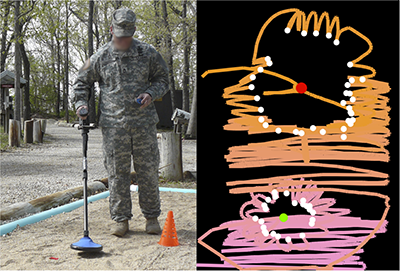 We have built an interactive visualization system, callded PETALS, that helps novice deminers learn how to correctly
identify dangerous cluster configurations of landmines. We conducted a controlled study with two experienced
instructors from the Humanitarian Demining Training Center (HDTC) in Fort Leonard Wood, Missouri and 58 participants,
who were put through the basic land mine detection course. Half of the participants
had access to PETALS during training and half did not. During the final exam, which all participants completed without
PETALS, participants who used PETALS during training were 72% less likely to make a mistake on the cluster tasks. These results
are not yet published, but the available papers capture the initial development and evaluation of the PETALS system.
We have built an interactive visualization system, callded PETALS, that helps novice deminers learn how to correctly
identify dangerous cluster configurations of landmines. We conducted a controlled study with two experienced
instructors from the Humanitarian Demining Training Center (HDTC) in Fort Leonard Wood, Missouri and 58 participants,
who were put through the basic land mine detection course. Half of the participants
had access to PETALS during training and half did not. During the final exam, which all participants completed without
PETALS, participants who used PETALS during training were 72% less likely to make a mistake on the cluster tasks. These results
are not yet published, but the available papers capture the initial development and evaluation of the PETALS system.
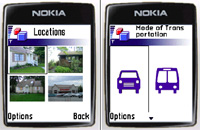 Opportunity Knocks (OK) is an automated transportation routing system,
whose goal is to improve the efficiency, safety and independence of
individuals with mild cognitive disabilities. OK is
implemented on a combination of a Bluetooth sensor beacon that
broadcasts GPS data, a GPRS-enabled cell-phone, and remote activity
inference software. The system uses a novel inference engine that does
not require users to explicitly provide information about the start or
ending points of their journeys; instead this information is learned
from users' past behavior.
Opportunity Knocks (OK) is an automated transportation routing system,
whose goal is to improve the efficiency, safety and independence of
individuals with mild cognitive disabilities. OK is
implemented on a combination of a Bluetooth sensor beacon that
broadcasts GPS data, a GPRS-enabled cell-phone, and remote activity
inference software. The system uses a novel inference engine that does
not require users to explicitly provide information about the start or
ending points of their journeys; instead this information is learned
from users' past behavior.