![]() |
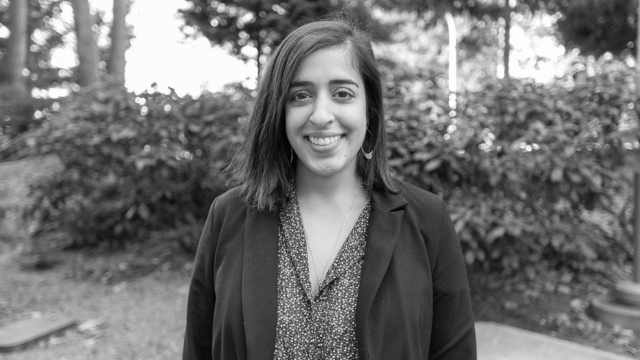
Saleema Amershi |
samershi [at] cs [dot] washington [dot] edu Paul G. Allen Center, Room 324
University of Washington
Seattle, WA
My Curriculum Vitae (Updated Oct. 2008) |
I'm a PhD student in Computer Science & Engineering at the University of Washington. My research interests are in human-computer interaction, statistical machine learning, intelligent user interfaces and user modeling. I'm currently working on human-in-the-loop machine learning tools for helping people explore data in databases. I'm advised by James Fogarty
I have a M.Sc. in Computer Science from the University of British Columbia where I worked in The Laboratory for Computational Intelligence with Cristina Conati on a machine learning based framework for user modeling. I also have a B.Sc. in Computer Science and Mathematics from the University of British Columbia.
![]() |
Multiple Mouse Text Entry for Single Display Groupware Education in developing regions often suffers from the lack of critical resources. A recent solution to the limited availability of compupters is multiple mouse single display groupware systems for entire classrooms. However, most of these systems have been limited to point-and-click based activities. In this research, we explore multiple mouse-based text entry techniques to enable richer educational activities. |
![]() |
Intelligence in Wikipedia [AAAI 2008 Senior Papers Track (pdf)] This project combines self-supervised information extraction (IE) techniques with a mixed initiative interface designed to encourage communal content creation (CCC). Since IE and CCC are each powerful ways to produce large amounts of structured information they have been studied extensively - but only in isolation. By combining the two methods in a virtuous feedback cycle, we aim for substantial synergy. |
![]() |
APEX: Automatically Extracting Events from Sensory Data The APEX system takes a human-in-the-loop machine learning approach to help users extract high-level events from low-level RFID data stored in relational databases. APEX automatically searches databases for high-level events in the form of statistical patterns which it presents to the user for iterative refinement and then stores for future sensor-based application use. APEX is intended to make interaction with databases more accessible to end users such as sensor-based application developers. |
![]() |
CoSearch: A System for Co-located Collaborative Web Search [CHI 2008 (pdf)] [CHI 2008 Workshop on HCI for Community and International Development (pdf)] [CHI 2008 Workshop on Sensemaking (pdf)] Web search is often viewed as a solitary task; however, there are many situations in which groups of people gather around a single computer to jointly search for information online. CoSearch is a system we developed that leverages devices cheap and ubiquitous in the environment, such as multiple mice and mobile phones, in order to facilitate co-located collaborative Web search around a shared PC. |
![]() |
Unsupervised and Supervised Machine Learning in User Modeling [IUI 2007 (pdf)] [ITS 2006 (pdf)] [AAAI 2007 Nectar Track (pdf)] Two of the most cited difficulties of developing user models for intelligent interfaces are the laborious effort required by application designers to construct models, and the limited transferability of those models across applications. In this research we designed and evaluated a machine learning based framework for building user models that reduces the development costs traditionally associated with user modeling. |
![]() |
Using Unsupervised Machine Learning to Identify Affective Expressions in Educational Games [ITS 2006 Workshop on Motivational and Affective Issues in ITS (pdf)] Educational games can induce a wide range of emotions, and so recognizing specific emotions may be valuable for an intelligent system that aims to adapt to varying student needs so as to improve learning. In this research, we investigated ths use of unsupervised machine learning for identifying biometric expressions of affective reactions exhibited by students interacting with an educational game. |
Pedagogy and Usability in Interactive Algorithm Visualizations [Interacting with Computers - The Interdisciplinary Journal of HCI 2008 (pdf)] [ITiCSE 2005 (pdf)] Interactive algorithm visualizations (AVs) are powerful tools for teaching and learning concepts that are difficult to describe with static media alone. However, while countless AVs exist, their widespread adoption by the academic community has not occured due to the usability problems and mixed results of pedagogical effectiveness reported in the (AV) and education literature. In this research, we present a taxonomy of goals for designing interactive AVs that address these problems. We also describe our own experiences designing and evaluation a set of interactive AVs for learning artificial intelligence. | |
![]() |
AIspace: Tools for Learning Artificial Intelligence [http://www.aispace.org] AIspace is an ongoing, collaborative research project centered around a set of interactive algorithm visualization tools for learning about artificial intelligence algorithm. |
I currently have two papers in submission to CHI 2009.
Weld, D.S., Wu, F., Adar, E., Amershi, S., Fogarty, J., Hoffmann, R., Patel, K., and Skinner, M.(2008) Intelligence in Wikipedia. In Proceedings of The AAAI Conference on Artificial Intelligence (AAAI 08) Senior Papers Track, pp. 1609-1614. [pdf]
Amershi, S. and Morris, M.R. (2008) CoSearch: A System for Co-located Collaborative Web Search. In Proceedings of The ACM Conference on Human Factors in Computing Systems (CHI 2008), pp. 1647-1656. [pdf] [mov]
Conati, C., Merten, C., Amershi, S., and Muldner, K. (2007) Using Eye-tracking Data for High-Level User Modeling in Adaptive Interfaces. In Proceedings of The AAAI Conference on Artificial Intelligence (AAAI 07) Nectar Track, pp. 1614-1617. [pdf]
Amershi, S. and Conati, C. (2007) Unsupervised and Supervised Machine Learning in User Modeling for Intelligent Learning Environments. In Proceedings of The ACM/SIGCHI Conference on Intelligent User Interfaces (IUI 2007), pp. 72-81.[pdf]
Amershi, S. and Conati, C. (2006) Automatic Recognition of Learner Groups in Exploratory Learning Environments. In Proceedings of Intelligent Tutoring Systems (ITS 2006), pp. 463-472.[pdf]
Amershi, S., Arksey, N., Carenini, G., Conati, C., Mackworth, A., Maclaren, H., and Poole, D. (2005) Designing CIspace: Pedagogy and Usability in a Learning Environment for AI. In Proceedings of The ACM/SIGCSE Conference on Innovation and Technology in Computer Science Education (ITiCSE 2005), pp. 178-182.[pdf]
Amershi, S., Carenini, G., Conati, C., Mackworth, A., and Poole, D. (2008) Pedagogy and Usability in Interactive Algorithm Visualizations - Designing and Evaluating CIspace. Interacting with Computers - The Interdisciplinary Journal of Human-Computer Interaction 20 (1): pp. 64-96. [pdf]
Amershi, S. and Morris, M.R. (2008) CoSearch: Leveraging Multiple Devices to Enhance Collaboration in Resource-Constrained Environments. The ACM Conference on Human Factors in Computing Systems Workshop on HCI for Community and International Development (CHI 2008).[pdf]
Morris, M.R. and Amershi, S. (2008) Shared Sensemaking: Enhancing the Value of Collaborative Web Search Tools. The ACM Conference on Human Factors in Computing Systems Workshop on Sensemaking (CHI 2008). [pdf]
Amershi, S., Conati, C. and Maclaren, H. (2006) Using Feature Selection and Unsupervised Clustering to Identify Affective Expressions in Educational Games. In Proceedings of The Intelligent Tutoring Systems Workshop on Motivational and Affective Issues in ITS (ITS 2006), pp. 21-28.[pdf]
Amershi, S. (2007) Combining Unsupervised and Supervised Machine Learning to Build User Models for Intelligent Learning Environments. Master’s Thesis, UBC.[pdf]