
Research & Innovation
The Allen School advances research excellence from the foundations of computing to emerging applications that are shaping the future of not just our field but also our broader society.
We have deep technical expertise that touches every aspect of computing, and we have a long and proud tradition of interdisciplinary collaboration on cross-cutting research with real-world impact. Our researchers continue to build on this tradition while opening up new avenues of exploration, harnessing the transformative power of computing to develop solutions that benefit people, society and the planet while expanding the frontiers of our field.
Explore Allen School Research
Artificial
Intelligence
Our researchers are driving exciting developments in AI while cultivating a deeper understanding of the science and impact of these rapidly evolving technologies on industries, cultures and communities.
Computing +
Biology
Our researchers are advancing computational methods to help solve biology and medicine’s biggest mysteries while taking inspiration from nature to reimagine what a computer can be.
Human-Centered
Computing
Our researchers are enhancing the ways in which people and communities engage with technology to maximize the benefits and minimize the harms to individuals, groups and society.
Interaction with the
Physical World
Our researchers are tapping into the potential of low- and no-power sensing, communication and interaction technologies to transform how we experience the world around us.
Software & Hardware
Systems
Our researchers are driving innovation across the entire hardware, software and network stack to ensure the computer systems that we depend upon everyday are reliable and secure.
Theory & Models
of Computation
Our researchers are answering fundamental and long-standing questions about the capabilities and limitations of computing, with practical implications in a variety of real-world domains.
Grand Challenges: Advancing computing innovation in service to humanity
Allen School researchers are leveraging our world-leading expertise and multidisciplinary collaborations in artificial intelligence, security and privacy, human-computer interaction, and more for the benefit of people and communities in Washington state and around the globe.

Highlights
Allen School News
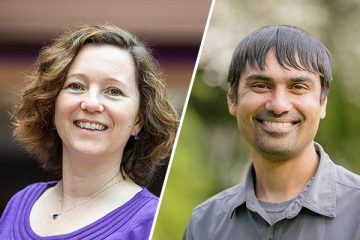
Professor Magda Balazinska was honored for her influential contributions in data management and data science, while Professor Shwetak Patel was recognized for his groundbreaking work applying computing to health and sustainability.
Allen School News

After more than four decades on the faculty, Henry M. Levy (Hank) officially retired from the University of Washington last summer. Now, friends and colleagues are contributing to the creation of a new professorship in the Allen School to honor his vision and leadership.
Allen School News

In December, Feng was named among the 2026 class of NVIDIA Graduate Fellows in recognition of his work on model collaboration, where “multiple AI models, trained on different data, by different people, and thus possess diverse skills and strengths, collaborate, compose and complement each other.”
Faculty in Focus: Nirvan Tyagi
Tyagi, a member of the Cryptography Research Group and Security & Privacy Research Lab, discusses his work on zero knowledge proofs and other techniques that provide strong privacy for users while maintaining performance.
Campus Collaborations
The Allen School partners with units across the UW on interdisciplinary research and education initiatives to advance knowledge and benefit society.
Click on the map below to explore our campus collaborations.