
Latest News
Stories about the Allen School’s people, research and impact.
-
September 16, 2026 -
UW News
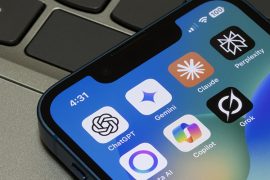
To help shed light over safety and security concerns with current AI systems, UW News spoke with researchers including professors Franziska Roesner and Noah A. Smith.
-
September 16, 2026 -
Allen School News
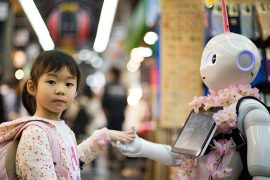
In the first installment of a new Q&A series exploring grand challenges in computing, Reinecke and Smith discuss how they and their colleagues aim to answer the question, “How do we design AI in a way that is transparent and equally beneficial to all?”
-
September 1, 2026 -
Allen School News
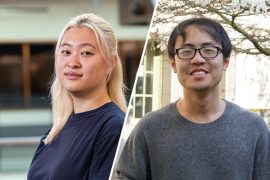
Allen School faculty recognized 2025 alumni Wei and Zhu for their outstanding doctoral dissertation research identifying new methods for tackling online harassment introducing more secure techniques for generating digital signatures, respectively.

-
August 27, 2026 -
GeekWire
Allen School alum Cory Black (B.S., ‘18) left a career in tech behind when he literally ran off to join the circus. Now a full-time soccer freestylist, he recently took home the bronze medal from the International Jugglers’ Association Championships.
-
August 26, 2026 -
Allen School News
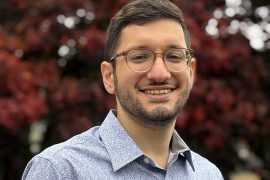
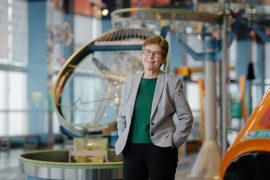
Itani, who works with Allen School professor Shyam Gollakota in the Mobile Intelligence Lab, was recognized for exceptional early-career research advancing AI systems for “superhuman” hearing.
-
August 26, 2026 -
Science World
Murphy (Ph.D., ‘96), professor and former Vice-President Research and Innovation at the University of British Columbia, will lead the Vancouver, BC organization’s efforts to engage learners in STEAM (science, technology, engineering, art & design and math).

-
August 13, 2026 -
Allen School News
Researchers in the Programming Languages & Software Engineering (PLSE) group introduced egg, an open-source library that uses e-graphs along with equality saturation to optimize term representations. Their paper was recently featured as a Communications of the ACM Research Highlight.

-
August 7, 2026 -
HearingTracker
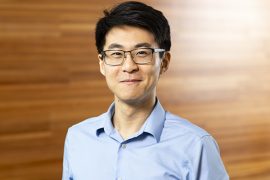
A technology known as semantic hearing developed in Allen School professor Shyam Gollakota's lab could let users create acoustic bubbles, isolate chosen voices, and control individual sounds in their environment.
-
August 5, 2026 -
Allen School News
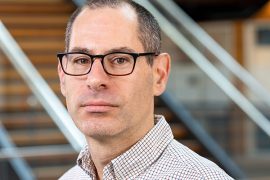
Li (B.S., ‘13) and his collaborators received the award for resolving a foundational problem in robust statistics, proving that a broad class of high-dimensional statistical problems can be both efficiently and robustly solved, even when some of the data has been corrupted.
-
August 3, 2026 -
Allen School News
Grossman, who has served as vice director of the school for the past nine years and is a recognized leader in programming languages education and research, will succeed Magdalena Balazinska at the conclusion of her term on August 17.