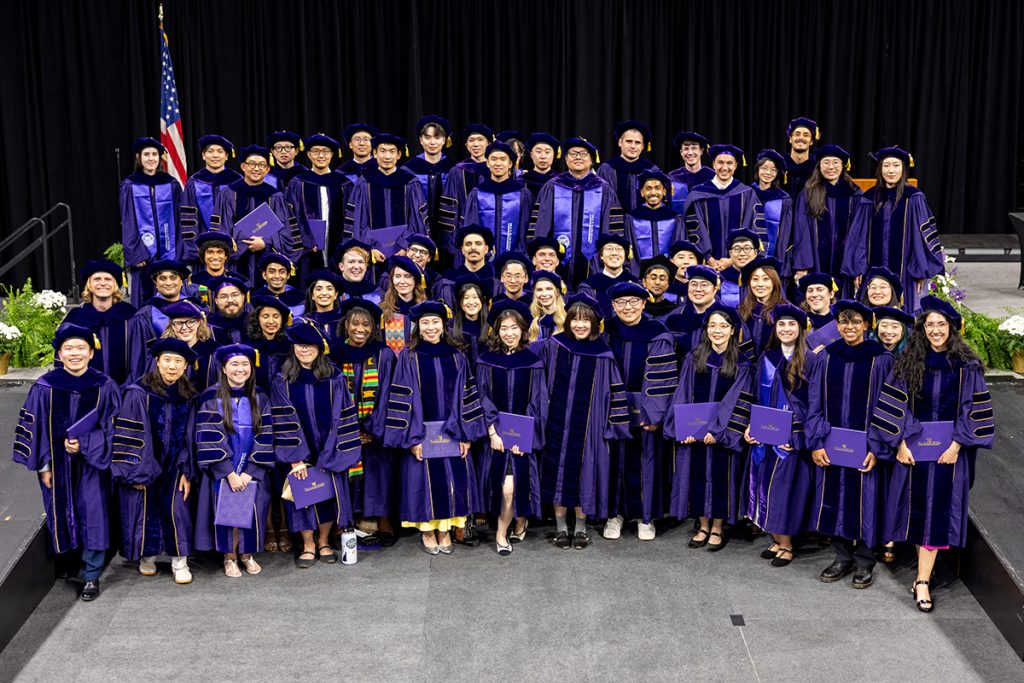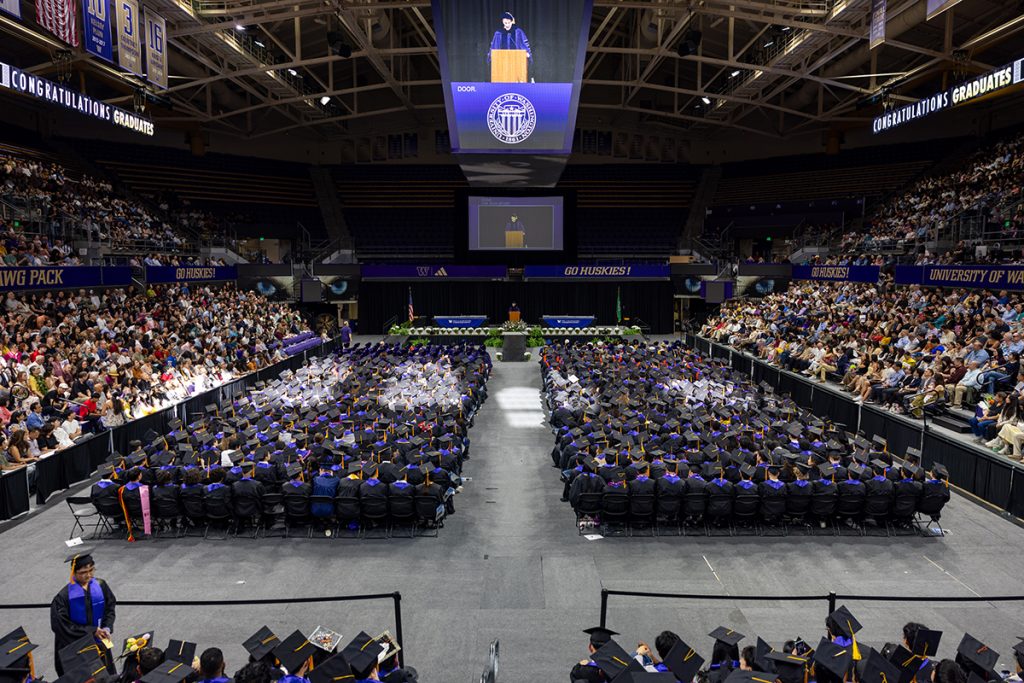
Undeterred by traffic, transit woes, weather or the World Cup, nearly 7,500 participants and guests packed the Alaskan Airlines Arena at the University of Washington the evening of June 12th to cheer on the Allen School graduates about to begin their next chapter. In all, the school will have awarded more than 800 degrees this year — and the vast majority of them were seated on the arena floor as professor Magdalena Balazinska — overseeing proceedings for the final time as Director of the Allen School — kicked off the celebration by acknowledging what it took for them to reach this happy milestone.
“You have taken challenging courses, worked late into the night on all kinds of assignments and projects and papers, contributed to the Allen School community in a variety of ways, and hopefully also made some friends along the way,” said Balazinska, who then launched into a call and response inviting members of the audience to cheer for the graduates and all those who supported them.
Jeff Dean (Ph.D., ‘96): ‘Discernment of what is important can be your superpower’
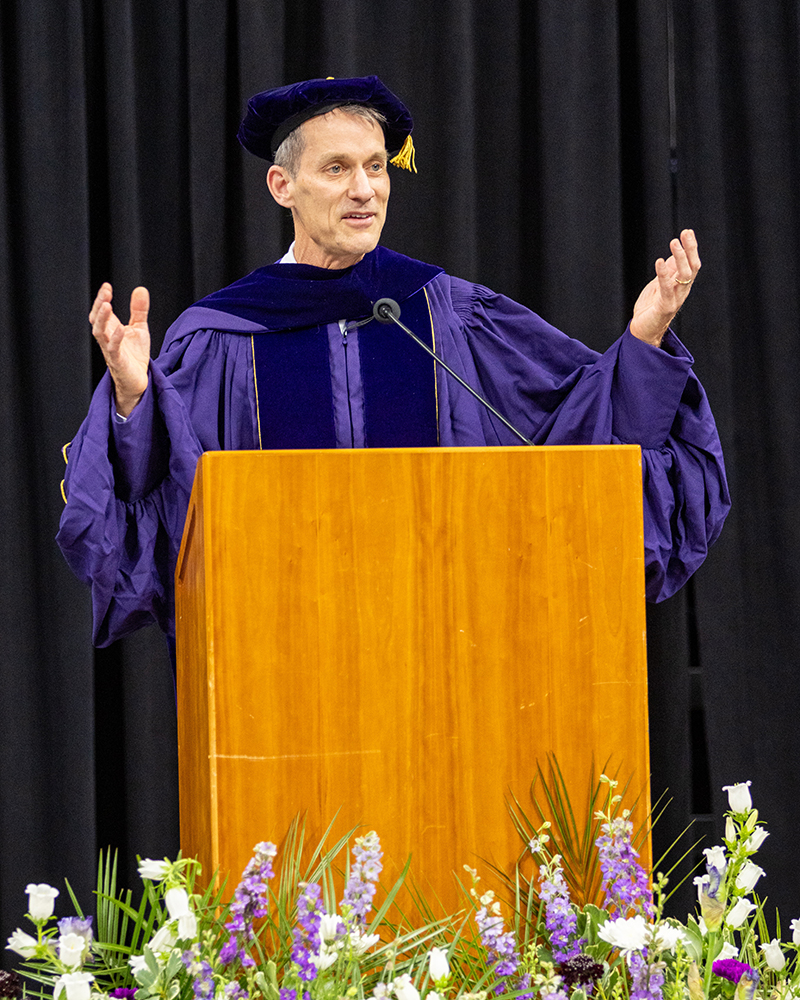
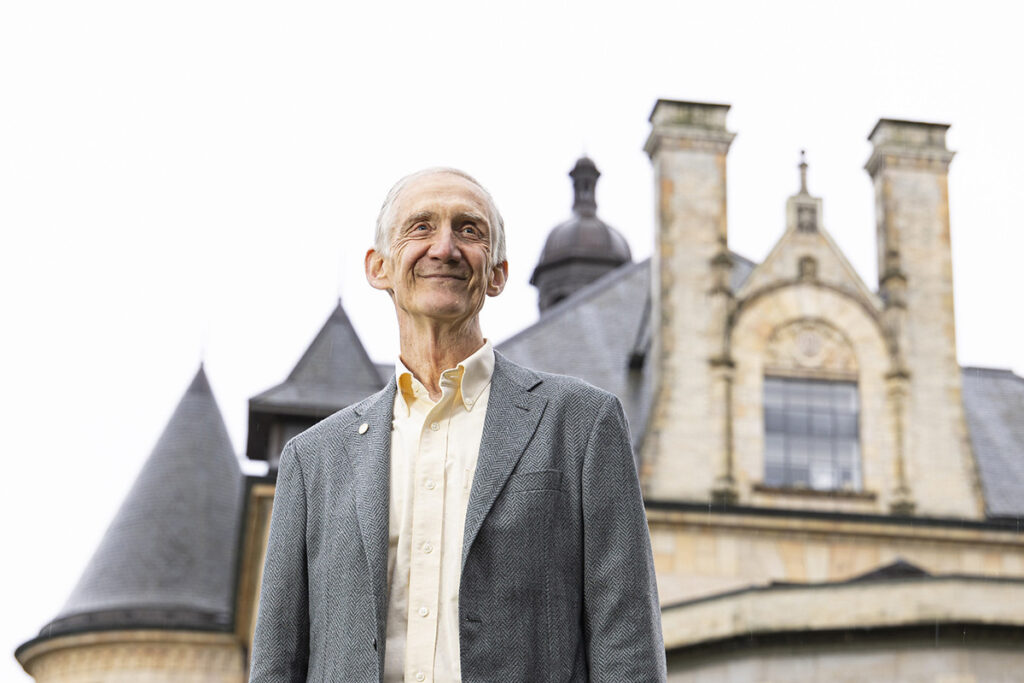
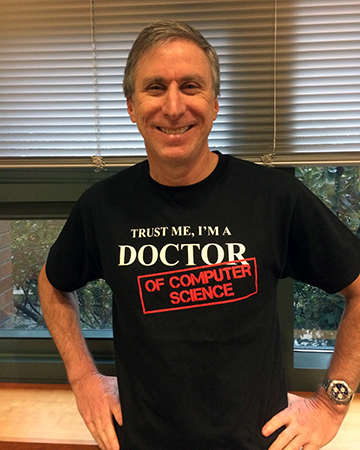
A familiar face joined in congratulating the graduates — and even donned the traditional purple regalia of a UW doctoral degree. Thirty years after his own graduation from the Allen School, Jeff Dean returned to his alma mater to stand on the other side of the podium and share advice and encouragement with those about to take their next step.
Long before he graduated and left Seattle to become one of the first 20 employees at a little search engine startup called Google, Dean’s world view was shaped by a childhood involving extensive travel in which he went to 11 schools in 12 years — an experience, he says, that taught him that “extraordinary people and communities exist everywhere.”
“So embrace every experience,” he advised. “You will inevitably end up in an unexpected place in your life, but you can find value and learn something from it — something new, if you’re open to finding it.”
That something might include an idea whose time hasn’t yet come. Dean recalled how, as an undergraduate, he experimented with how to scale neural networks to solve real-world problems, but computers didn’t have sufficient processing power to do what he wanted. It would be 20 years before the field reached the point where his vision could become reality.
“When the time is right, you may find that something you learned a while ago can now help you achieve something that was not previously possible,” he said.
Dean observed — and in several cases, helped bring about — the emergence of many transformative technologies during a career in which he rose to Chief Scientist for Google DeepMind and Google Research and Gemini overall technical lead. (He subsequently left the company to launch a new startup, Discovery Loop, in August). During his June address, Dean shared his optimism about artificial intelligence, in particular, owing to its potential to solve global challenges in healthcare, education, scientific discovery and other areas. He also acknowledged people’s valid concerns about the potential downsides of AI. It would be up to those seated on the arena floor, he said, to shape these technologies so that they benefit the broader good rather than only a select few.
“As graduates entering a rapidly evolving world, remember this: As tools make the ‘how’ of what we do simpler in some cases, it becomes even more important to be wise in what you create with these technologies,” he said. “That discernment of what is important can be your superpower.”
As tools make the “how” of what we do simpler in some cases, it becomes even more important to be wise in what you create with these technologies.
Dean also reminded the graduates that saying goodbye to the Allen School doesn’t mean saying goodbye to the people who helped shape their experience here.
“The memories you made with your fellow UW classmates will shape your future, as it did mine,” Dean said. “You can continue to learn and grow together.”
Honoring alumni excellence: David Dawson (B.S., ’06) and Nodira Khoussainova (Ph.D., ’12)
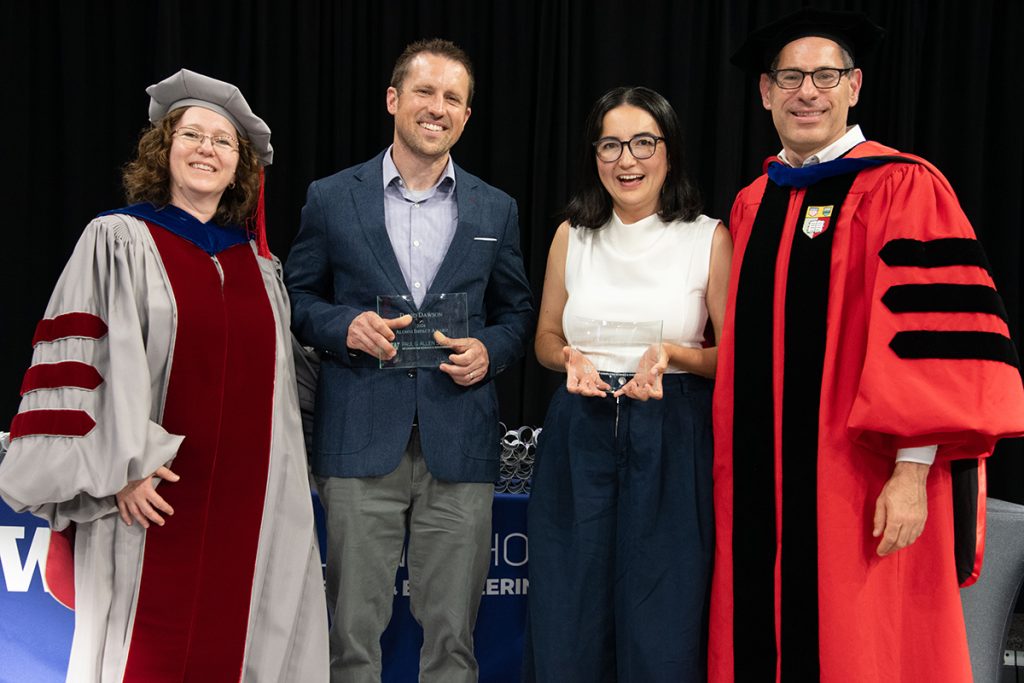
Dean is a past recipient of the Allen School’s Alumni Impact Award, which serves two purposes: to recognize some of the school’s most accomplished alumni, and to show new graduates that they are joining a long line of former students who are changing the world. Professor Dan Grossman — in his last official act as Allen School Vice Director before stepping into the interim director role — took to the stage to recognize the two alumni who recently joined that rarified group as recipients of the 2026 Alumni Impact Awards.
After graduating from the UW, honoree David Dawson tapped into an entrepreneurial spirit honed in high school, when he built websites for local businesses, to build a series of startups “rooted in community, purpose, and the people around him,” said Grossman. His first job out of college was with fledgling online real estate company Zillow, where he was one of the first software engineers. He subsequently co-founded Stash Hotel Rewards, a loyalty program for independent hotels, dinner-delivery service Leah’s Kitchen, and recycling subscription service Ridwell. He continues in an advisory role for the latter, even as he pivots to helping other entrepreneurs harness AI to build their businesses.
Honoree Nodira Khoussainova combines an entrepreneurial spirit with systems expertise honed working with Balazinska and Allen School professor Dan Suciu in the UW Database Group. After earning her doctorate, she co-founded Streamlit, a maker of data app development tools that was later acquired by Snowflake. Khoussainova also led the experimentation team at X (formerly Twitter), where she observed technology’s impact on human behavior and mental health. Those observations inspired her to co-found Focused Space, an online co-working platform that supports users to make progress toward their goals through “body doubling” and other productivity tools. Khoussainova, who is CEO of the company, credits the Allen School for teaching her that “technology is only as meaningful as the humans it serves.”
“David and Nodira are exceptional role models for our graduates,” Grossman said in an earlier announcement. “They demonstrate how you can bring the technical skills unique to a computing education to bear on matters of community and societal well being that we can all relate to.”
Vaishnavi Vidyasagar (B.S., ‘26): ‘We aren’t just writing code, but we’re opening doors’
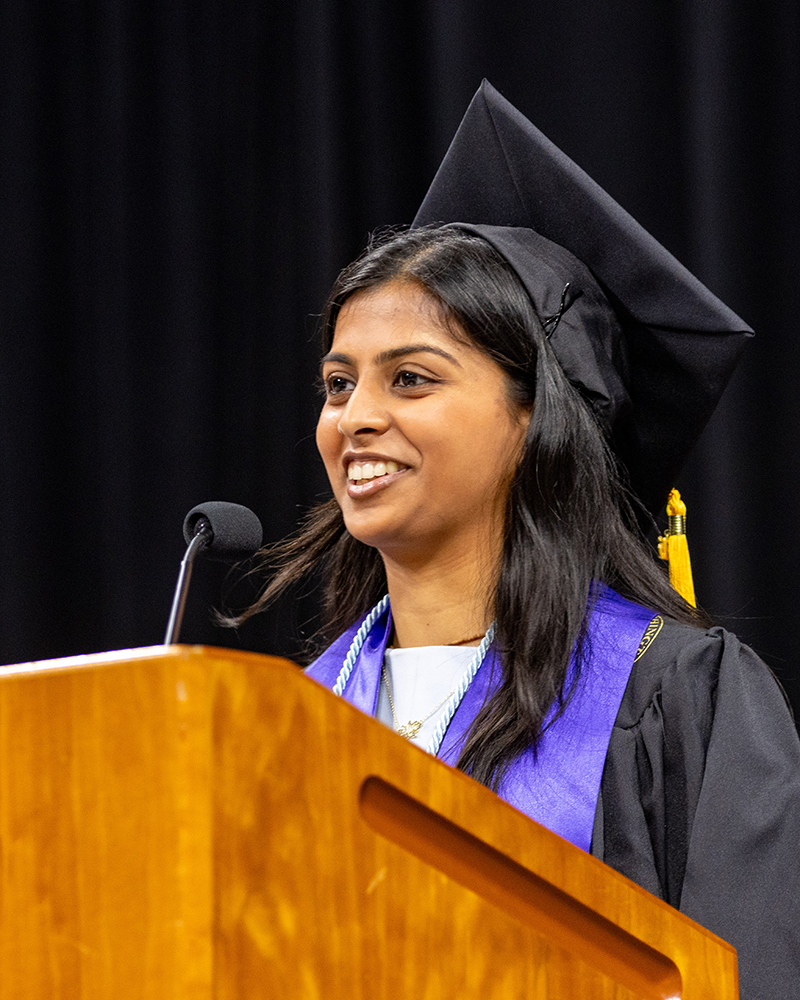
This year, the Allen School initiated a new tradition in which a member of the current graduating class is selected to deliver an undergraduate student address. The inaugural speaker, Sammamish, Washington native Vaishnavi Vidyasagar embraced the opportunity to check an item off her bucket list — a giant selfie of herself and all the graduates from the stage — before reflecting on what it took for them all to get there.
Recalling late-night lab sessions, days of debugging code and nervous moments asking questions in class, Vidyasagar also shared how her view of computer science evolved during her time at the Allen School. “For a long time, I thought computer science was the system of efficiency, optimization and saving memory,” she said.
Her perspective changed while working with robotics professor Maya Cakmak on a research project for people with upper-body impairments. The experience caused her to understand technology not as something that “helps” but rather something that gives people autonomy. “As computer scientists, we aren’t just writing code, but we’re opening doors,” she said.
Acknowledging that she and her classmates were graduating into a rapidly changing world, Vidyasagar expressed confidence in their collective ability to define the future of their field.
“We’re a class that pairs strong foundations with deep human empathy. We’re a class of teachers, leaders and entrepreneurs. As you walk across the stage, I want you to remember that success was not a result, but it was a journey toward it,” she said. “I can’t wait to see the impact you’ll make on your journeys ahead.”
Honoring student leadership, scholarship and service
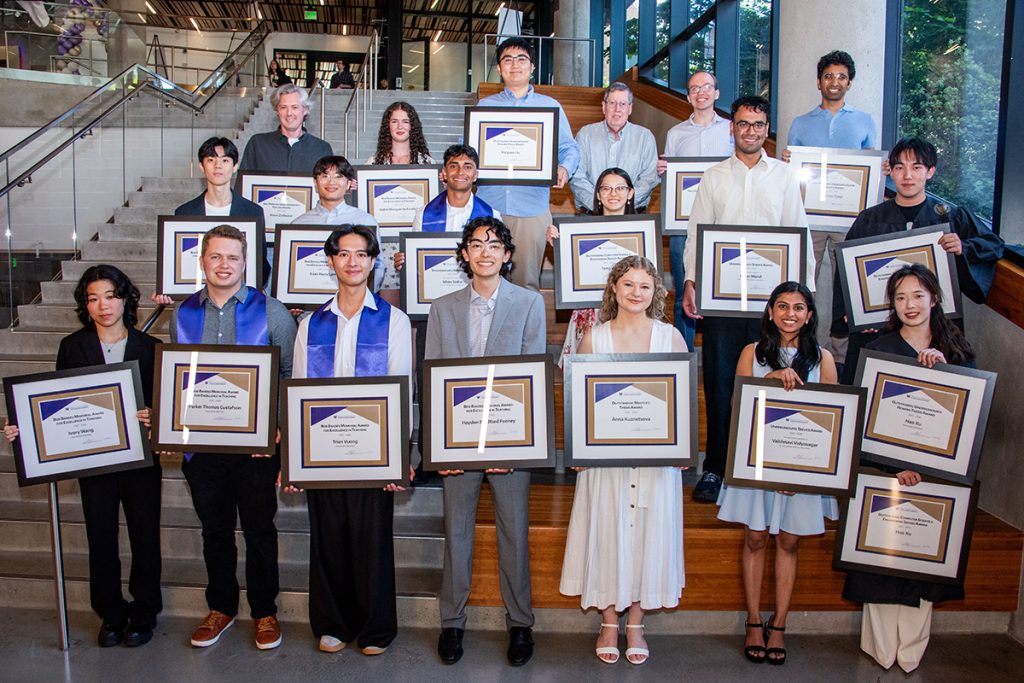
Earlier in the day, the Allen School honored Vidyasagar and a group of her peers for their academic achievements, support for fellow students and contributions to the campus community through its end-of-year awards. Family and friends were invited to join this more intimate ceremony celebrating the recipients before later applauding them en masse on the arena floor.
Undergraduate Service Awards
Vidyasagar earned one of four Undergraduate Service Awards for her leadership and dedication that “have left a lasting and meaningful mark on the Allen School.” As chair of Computing Community, or COM^2, Vidyasagar oversaw the student organization’s programming and events that serve the school’s more than 2,300 undergraduates. Along the way, she earned the respect and admiration of peers and collaborators for her empathy, integrity and commitment to empowering others.
Hawa Drammeh — described as an “extraordinary force” from the moment she arrived at the Allen School — was recognized for her work as founder of CSEED, a student organization that supports students to become innovators through a combination of mentorship, community-building, professional development and peer support. Known for bringing people together and building people up, Drammeh grew CSEED into one of the school’s largest, most impactful student organizations serving nearly a thousand students each year.
Joban Mand was recognized for his contributions as an Allen School peer adviser, undergraduate researcher and officer of the student affinity group Ability. Whether mentoring his fellow students as they navigate academic and personal challenges, helping to build a supportive community among students with disabilities and allies, or investigating AI to support wildlife conservation efforts, Mand “has left a lasting impression on students and staff alike” owing to his empathy, advocacy and genuine care for members of the Allen School community.
Ishan Sinha, who “consistently leads by example and inspires those around him to strive for excellence,” was recognized for his contributions with the Algorithmic Trading Club, a student organization focused on the intersection of technology and finance. As ATC’s managing director, Sinha developed a comprehensive curriculum, secured sponsorships from major firms such as Jane Street and Citadel, and personally mentored students. He also served as co-president of the Lavin Entrepreneurship Program supporting undergraduate student entrepreneurs.
We’re a class that pairs strong foundations with deep human empathy. We’re a class of teachers, leaders and entrepreneurs.
Outstanding Senior Awards
Weikai Huang was recognized for his contributions to vision-language models and 3D computer vision as an undergraduate researcher in the Allen School’s Reasoning, AI, and VisioN (RAIVN) Lab and at the Allen Institute for AI. His work includes large-scale data and model pipelines for real-world use in 3D object detection and a system for text-to-video generation, with papers appearing at the International Conference on Learning Representations (ICLR) and the Conference on Computer Vision and Pattern Recognition (CVPR). Huang will start his Ph.D. in the Allen School this fall.
Tong Lin was recognized for her scholarship and leadership that also inspired her nomination for a College of Engineering Dean’s Medal. Lin’s contributions as a researcher in the UbiComp Lab and Personal Robotics Lab spanned robotics, embedded systems, sustainability, and AI-assisted engineering tools. A paper she co-authored exploring approaches for more sustainable electronics design earned an honorable mention at the 2025 CHI Conference on Human Factors in Computing Systems. Lin, who was an active member of Advanced Robotics at UW, will join the NVIDIA robotics team after graduation.
Hao Xu was recognized for her research in AI transparency, fairness and language model evaluation. Xu’s contributions include a groundbreaking new tool for identifying benchmark contamination in large text-based training datasets that earned the Best Paper Award at 2025 Conference on Empirical Methods in Natural Language Processing (EMNLP). Xu, who was named a finalist in the CRA Outstanding Undergraduate Researcher Awards and nominated for the College of Arts & Sciences Dean’s Medal, will pursue a Ph.D. at Stanford University this fall.
Student Thesis Awards
Kaiyuan Liu received the Best Senior Thesis Award for “Code as a Substrate toward LLM Self-Improvement,” which he completed under the guidance of professor Natasha Jaques. Liu developed multiple approaches for evaluating LLMs’ ability to generate and solve competitive programming problems. His projects included LiveCodeBench Pro, a benchmark for testing models’ reasoning capabilities that was presented at NeurIPS 2025 and featured in Google’s release of Gemini 3. Earlier this year, Liu earned an honorable mention in the CRA Outstanding Undergraduate Researcher Awards for his work.
Xu, who earlier received an Outstanding Senior Award, returned to the stage to collect an honorable mention for “Navigating Language Model Training Data with Scalable N-gram Search,” which she completed under the guidance of professor Hanna Hajishirzi.
Anna Kuznetsova was recognized with the Outstanding Master’s Thesis Award for her thesis “Does This Even Matter in the Real World? Real World Problems in Foundational Theory Courses” that she completed as part of the Allen School’s B.S./M.S. program. Under the guidance of teaching professor Robbie Weber, Kuznetsova explored students’ view of computer science theory courses and their relevance outside of the classroom. As part of this work, she developed new homework problems grounded in real-world applications of the material and surveyed students to assess how this approach contributed to their sense of relevance and learning outcomes.
Commemorating excellence in teaching
Hal Perkins Undergraduate Teaching Award
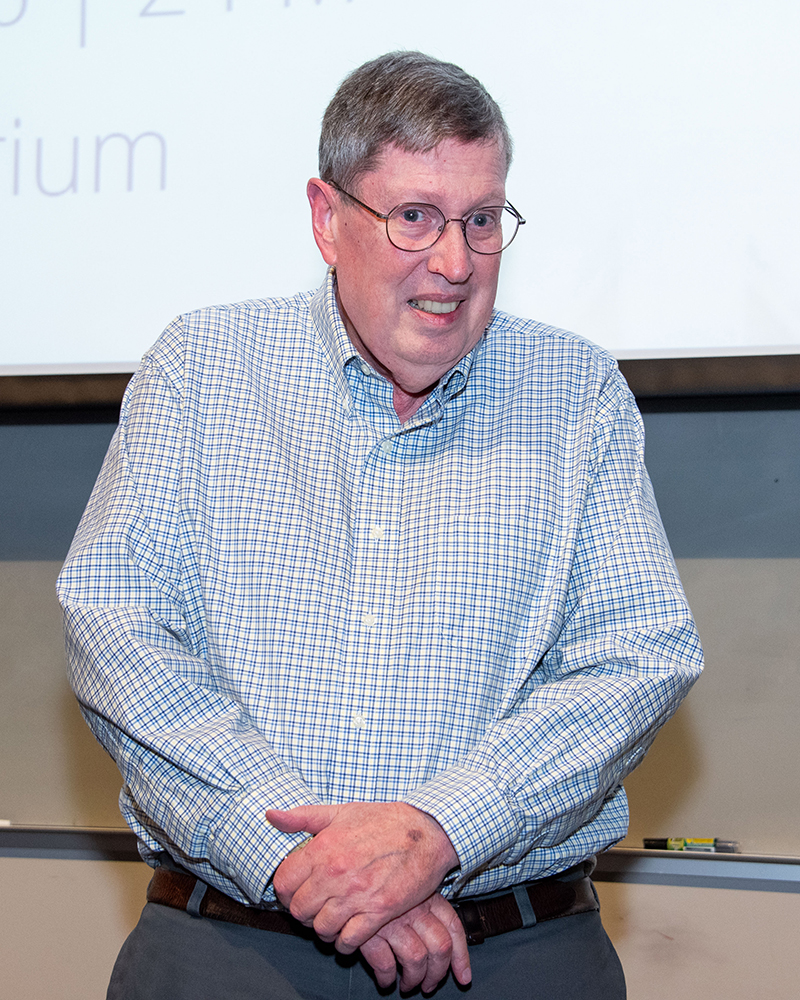
Vidyasagar returned to the podium, this time in her capacity as chair of COM^2, to announce the recipients of the Undergraduate Teaching Awards, an annual tradition in which the students recognize faculty members for the positive impact they have had on their education. This year, COM^2 surprised longtime teaching professor Hal Perkins by officially changing the name of the award to the Hal Perkins Undergraduate Teaching Award in honor of his impact on students during his 28 years of service.
“Anyone who has worked with Hal knows that he takes a human-first approach to the work, always lending a smile, checking in on his colleagues and students, and thoughtfully advocating for changes in the Allen School that ultimately support our student success,” Vidyasagar said. “Hal is the epitome of who an educator should and can be.”
Three of Perkins’ colleagues received inaugural awards in his name.
Professor Nirvan Tyagi was recognized for making his Computer Security course exciting and relevant for students, who found his passion for the topic helped them overcome any initial apprehensions they may have had about the course. Known for delivering engaging lectures in which he often shares real-world examples, Tiyagi “has made the class feel connected to their career paths beyond school and opened new avenues as students continue to explore the field of security and privacy,” said Vidyasagar.
Teaching professor Robbie Weber was described by one student as “without a doubt, one of the best professors they have worked with at U-Dub.” Weber’s excitement at sharing various techniques in his Foundations of Computing and Algorithms courses helps students to build their confidence with the material, while his thoughtful approach to integrating AI tools into his curriculum helps them to master it. “It is obvious in everything Robbie does that his primary goal is to have students learn and thrive in his classes,” said Vidyasagar.
Affiliate professor Kevin Zatloukal was recognized for his “legendary dedication” to both his students and teaching assistant (TA) staff. Drawing upon his nearly 30 years of experience as a professional programmer and nearly a decade in the classroom, Zatloukal is known for bringing a combination of clarity, energy and humor to challenging subjects in his Foundations of Computing and Software Design & Implementation courses. “Kevin is not only an outstanding educator, but an exceptional person who has left an immense mark on the Allen School,” Vidyasagar concluded.
Bob Bandes Memorial Awards
The professors celebrated by COM^2 and their faculty colleagues count on the Allen School’s TAs who support the Allen School’s education mission by running quiz sections, holding office hours to provide individualized student support and handling a variety of administrative tasks. Each year, the school pays tribute to a select group of TAs who go above and beyond for their course instructors and their fellow students through the Bob Bandes Memorial Awards.
This year, the school received more than 500 nominations in support of 216 individual TAs. Teaching professors Ruth Anderson and Miya Natsuhara had the happy job of announcing three award winners — Hayden Feeney, Isabel Froelich and Evan Lam — along with four honorable mention recipients.
Hayden Feeney served as a TA a total of 10 times for introductory courses CSE 121 and CSE 123, and is teaching 121 this summer. Known for building a supportive community among his fellow TAs, Feeney was, according to a peer, “quite possibly the most considerate, hardworking, and intentional person I have ever had the pleasure of working with.” As one student observed, “Not only is he exceptional at breaking down computer science concepts to novices in a digestible way, but he does it in the most caring and cordial way possible.”
Isabel Froelich was a TA six times spanning three different courses, including CSE 369 Introduction to Digital Design, the Transfer Admit Seminar and the Mathematics for Computation Workshop. Froelich took an active role in course planning as well as teaching, with one instructor placing her among “the best TAs I’ve worked with.” The students in her classes appreciated Froelich for going “above and beyond to connect with students and check in on how we were doing.”
Evan Lam served as a TA for CSE 484 Computer Security seven times — a course that he made “approachable and meaningful,” in the words of one student, by explaining concepts with patience and clarity. The instructors Lam worked with agreed, with one noting that “he truly wanted to see each and every student succeed, and he would take whatever extra time was needed to make that happen.”
Parker Gustafson, Jonathan Trinh, Trien Vuong and Ivory Wang earned honorable mentions. Gustafson, who served as a TA 15 times across nine courses, was known for contributing “new ideas, activities, and content in the interest of supporting students’ learning.” Trinh, who served as a TA nine times spanning three courses, was known among students for going “above and beyond to ensure students truly understood the material rather than simply getting through it.” Vuong and Wang served as TAs for courses in the Allen School’s introductory series for 12 and seven quarters, respectively. Vuong stood out for his “passion and energy for teaching that’s contagious,” while Wang was appreciated for handling many of the “behind-the-scenes tasks that are often unseen by students and many other TAs.”
The memories you made with your fellow UW classmates will shape your future, as it did mine. You can continue to learn and grow together.
Congratulations and best wishes to all of our graduates!
Watch videos of the awards ceremony and graduation celebration on the Allen School’s YouTube channel.