
Advances in low- and no-power sensing, communication and interaction technologies offer new possibilities for blending digital innovation with our physical environment.
From gesture recognition that allows people to interact with objects in new ways, to low-power sensors that collect and transmit data about temperature, air quality, urban accessibility and more, our researchers are tapping into the potential of computation to transform how we experience the world around us.
Centers & Initiatives
Accessible Accordion
Areas of Expertise
Societal Impact
Results will appear in alphabetical order.

AI@UW aims to push the boundaries of AI technology in service to the public good by advancing ethical, interdisciplinary AI research while fostering practical innovation to benefit society at large.

The Science Hub supports a broad set of programs — including fellowships for doctoral students, collaboration among researchers and support for collaborative research events — designed to accelerate artificial intelligence (AI), robotics and engineering in the Seattle area.
DFab is a network of researchers, educators, industry partners, and community members advancing the field of digital fabrication at UW and in the greater Seattle region.
The mission of the UW Center for Research and Education on Accessible Technology and Experiences (CREATE) is to make technology accessible and the world accessible through technology. By bringing together researchers from across the campus, CREATE harnesses the diverse expertise necessary to realize a more just and equitable technological future, one that overcomes existing barriers and ensures new ones do not arise.
The Community-Engaged Computing Initiative (CECI) is a joint initiative to support community-centered scholarship and research within the broad computing and information field. Co-led by the Paul G. Allen School of Computer Science & Engineering, the Department of Human Centered Design & Engineering, and the Information School, the initiative was launched in 2025 through a gift from Google. CECI supports projects that bring UW faculty and graduate students together with community partners to bring sustainable, equitable, and inclusive technology into real-world contexts.

Computing for the Environment (CS4Env) at the University of Washington supports novel collaborations across the broad fields of environmental sciences and computer science & engineering. The initiative engages environmental scientists and engineers, computer scientists and engineers, and data scientists in using advanced technologies, methodologies and computing resources to accelerate research that addresses pressing societal challenges related to climate change, pollution, biodiversity and more.
Society + Technology is a cross-campus, cross-disciplinary initiative and community at the University of Washington that is dedicated to research, teaching and learning focused on the social, societal and justice dimensions of technology.
TCAT harnesses the power of open-source technology to develop, translate, and deploy accessible technologies, and then sustain them in the hands of communities. Housed by the Paul G. Allen School for Computer Science & Engineering, TCAT centers the experience of people with disabilities as a lens for improving design & engineering, through participatory design practices, tooling and capacity building.

The Tech Policy Lab is a unique, interdisciplinary collaboration at the University of Washington that aims to enhance technology policy through research, education, and thought leadership. Founded in 2013 by faculty from the Paul G. Allen School of Computer Science & Engineering, Information School, and School of Law, the Lab aims to bridge the gap between technologists and policymakers and to help generate wiser, more inclusive tech policy.
The Transportation Data Equity Initiative (TDEI) aims to enhance the quality and accessibility of travel services by building open source data collection and vetting tools, transportation data digital infrastructure, and governance frameworks that enable public-private data sharing and interoperability. The TDEI is a project sponsored by The Complete Trip, an ITS4US Deployment Program.
Highlights
Fast Company
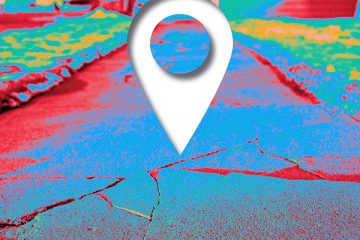
Allen School professor Jon Froehlich talks about how Project Sidewalk empowers communities by crowdsourcing data on pedestrian infrastructure, from curb ramps to broken pavement, to improve accessibility.
UW News
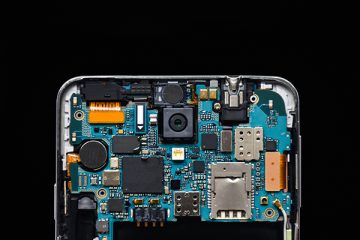
A team led by Allen School professor Vikram Iyer and Ph.D. student Zhihan Zhang published a paper in Nature Electronics describing a system that can assemble life cycle assessments, or LCAs, for electronic devices in about a minute with the help of AI agents.
Allen School News
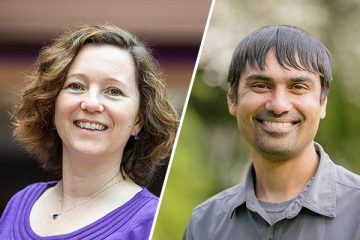
Professor Magda Balazinska was honored for her influential contributions in data management and data science, while Professor Shwetak Patel was recognized for his groundbreaking work applying computing to health and sustainability.