Our researchers are driving innovation across the entire hardware, software and network stack to make computer systems more reliable, efficient and secure.
From internet-scale networks, to next-generation chip designs, to deep learning frameworks and more, we build and refine the devices and applications that individuals, industries and, indeed, entire economies depend upon every day.
Research Groups & Labs
Information and Communication Technology for Development (ICTD) Lab
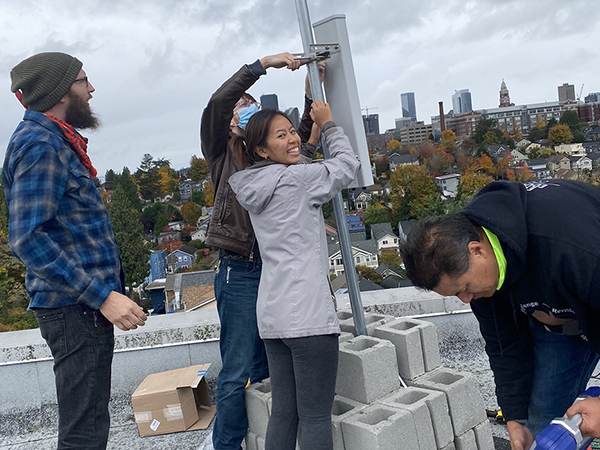
The ICTD Lab explores how technology can improve the lives of underserved populations in low-income regions through research spanning HCI, systems, communication and data analytics.
SAMPL is an interdisciplinary machine learning research group exploring problems across the system stack, including deep learning frameworks, specialized hardware for training and inference, new intermediate representations and more.
The UW Center for the Future of Cloud Infrastructure (FOCI) aims to foster a tight partnership between practitioners and researchers in both industry and academia to define the next generation of cloud infrastructure to achieve new levels of security, reliability, performance along with cost-efficiency and environmental sustainability.
IFDS organizes its research around four core themes: complexity, robustness, closed-loop data science, and ethics and algorithms. By making concerted progress on these fundamental fronts, IFDS aims to lower several of the barriers to better understanding of data science methodology and to its improved effectiveness and wider relevance to application areas.
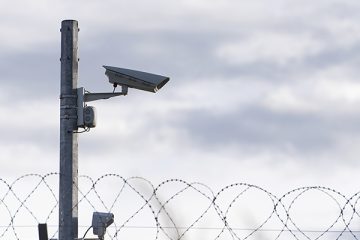
Allen School Ph.D. student Yael Eiger and professor Franziska Roesner discuss their research examining people’s experiences with technology during and after incarceration and the broader impacts of technology used for policing and post-release monitoring.
In their 2017 paper, Roesner and her co-authors were among the first to investigate end-user security and privacy perspectives on then-emerging smart home technologies and recommend ways to help users make more informed security decisions.
Professors Andrea Coladangelo, Matthew Golub, Ranjay Krishna, Chinmay Nirkhe, and Stephanie Wang are shaping the future of computing through projects spanning AI, systems, computational neuroscience, cryptography and quantum computing.