
Latest News
Stories about the Allen School’s people, research and impact.
-
October 7, 2026 -
UW News
Allen School Ph.D. student Yael Eiger and professor Franziska Roesner discuss their research examining people’s experiences with technology during and after incarceration and the broader impacts of technology used for policing and post-release monitoring.

-
October 2, 2026 -
Allen School News
In their 2017 paper, Roesner and her co-authors were among the first to investigate end-user security and privacy perspectives on then-emerging smart home technologies and recommend ways to help users make more informed security decisions.
-
September 30, 2026 -
Allen School News
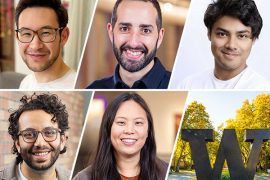
Professors Andrea Coladangelo, Matthew Golub, Ranjay Krishna, Chinmay Nirkhe, and Stephanie Wang are shaping the future of computing through projects spanning AI, systems, computational neuroscience, cryptography and quantum computing.
-
September 16, 2026 -
UW News
To help shed light over safety and security concerns with current AI systems, UW News spoke with researchers including professors Franziska Roesner and Noah A. Smith.
-
September 16, 2026 -
Allen School News
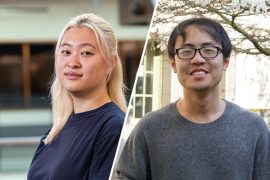
In the first installment of a new Q&A series exploring grand challenges in computing, Reinecke and Smith discuss how they and their colleagues aim to answer the question, “How do we design AI in a way that is transparent and equally beneficial to all?”
-
September 1, 2026 -
Allen School News
Allen School faculty recognized 2025 alumni Wei and Zhu for their outstanding doctoral dissertation research identifying new methods for tackling online harassment introducing more secure techniques for generating digital signatures, respectively.

-
August 27, 2026 -
GeekWire
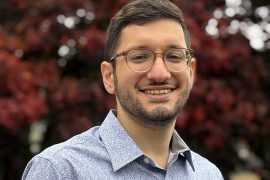
Allen School alum Cory Black (B.S., ‘18) left a career in tech behind when he literally ran off to join the circus. Now a full-time soccer freestylist, he recently took home the bronze medal from the International Jugglers’ Association Championships.
-
August 26, 2026 -
Allen School News
Itani, who works with Allen School professor Shyam Gollakota in the Mobile Intelligence Lab, was recognized for exceptional early-career research advancing AI systems for “superhuman” hearing.
-
August 26, 2026 -
Science World
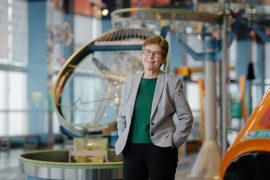
Murphy (Ph.D., ‘96), professor and former Vice-President Research and Innovation at the University of British Columbia, will lead the Vancouver, BC organization’s efforts to engage learners in STEAM (science, technology, engineering, art & design and math).

-
August 13, 2026 -
Allen School News
Researchers in the Programming Languages & Software Engineering (PLSE) group introduced egg, an open-source library that uses e-graphs along with equality saturation to optimize term representations. Their paper was recently featured as a Communications of the ACM Research Highlight.