
Our study of the theoretical foundations of computing spans algorithm design and analysis, complexity, optimization, cryptography, quantum and more.
We seek to answer fundamental and long-standing questions about the capabilities and limitations of our field, which has practical implications in economics, logistics, social welfare, transportation and many other real-world domains.
Centers & Initiatives
Accessible Accordion
Areas of Expertise
Societal Impact
Results will appear in alphabetical order.
The eScience Institute empowers researchers and students in all fields to answer fundamental questions through the use of large, complex, and noisy data. As the hub of data-intensive discovery on campus, we lead a community of innovators in the techniques, technologies, and best practices of data science and the fields that depend on them.

IFDS organizes its research around four core themes: complexity, robustness, closed-loop data science, and ethics and algorithms. By making concerted progress on these fundamental fronts, IFDS aims to lower several of the barriers to better understanding of data science methodology and to its improved effectiveness and wider relevance to application areas.

MEM-C is a NSF Materials Research Science and Engineering Center that integrates materials innovations with theory and computation to advance spin-photonic nanostructures and elastic layered quantum materials, aided by an “AI Core” that integrates artificial intelligence-driven materials discovery.
Highlights
Allen School News
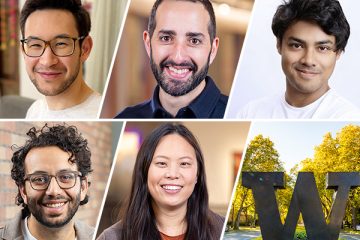
Professors Andrea Coladangelo, Matthew Golub, Ranjay Krishna, Chinmay Nirkhe, and Stephanie Wang are shaping the future of computing through projects spanning AI, systems, computational neuroscience, cryptography and quantum computing.
Allen School News
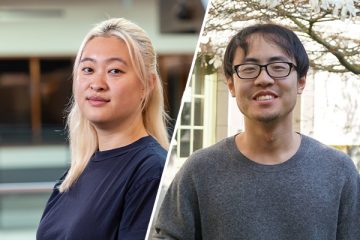
Allen School faculty recognized 2025 alumni Wei and Zhu for their outstanding doctoral dissertation research identifying new methods for tackling online harassment introducing more secure techniques for generating digital signatures, respectively.
Allen School News
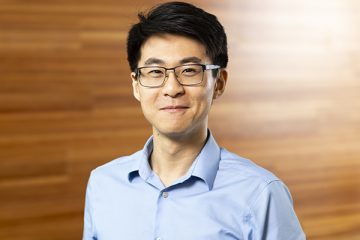
Li (B.S., ‘13) and his collaborators received the award for resolving a foundational problem in robust statistics, proving that a broad class of high-dimensional statistical problems can be both efficiently and robustly solved, even when some of the data has been corrupted.