Today, more and more consumers are transforming their homes into smart homes decked out with Internet of Things (IoT) devices such as thermostats, lights and locks that can be activated with voice commands or maybe a quick hand clap. While security experts have since raised privacy risks and other vulnerabilities with IoT and smart homes, back in 2017, little research had gone into the security and privacy concerns of the end users who actually set up and interact with smart homes.
Through a series of interviews with smart home users, a team of researchers in the Allen School’s Security and Privacy Research Lab identified gaps in threat models stemming from issues such as a limited technical understanding of IoT devices.
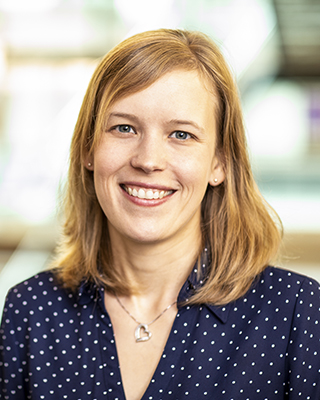
Franziska Roesner
In August, the team’s 2017 paper titled “End User Security & Privacy Concerns with Smart Homes” was recognized with the 2026 Symposium on Usable Privacy and Security (SOUPS) Impact Award at the SOUPS conference in Hanover, Germany. Presented every three years, the award highlights a highly-cited previous SOUPS paper “that has had a significant impact on usable security and privacy research and practice.”
“This paper was one of the first looks at end-user security and privacy perspectives on then-emerging smart home technologies, and it has been gratifying to see the amount of impact it has had within the human-centered computer security and privacy literature,” said Allen School professor and alum Franziska Roesner (Ph.D., ‘14), senior author of the paper and co-director of the Security and Privacy Research Lab.
The team found that participants’ threat models often depended on the sophistication of their technical mental models. For example, participants with less sophisticated mental models could not identify smart-home specific vulnerabilities and tended to base their mitigation strategies on best practices from other technologies such as using strong passwords. Participants generally did not share the same concerns over smart home technologies as security experts, which included risks associated with malicious devices or company data collection. Participants indicated they were not concerned about those potential risks because they did not feel personally targeted and believed their existing mitigation strategies were sufficient.
Since the paper was published, smart homes have become even more prevalent. We hope our recommendations have helped designers build safer and more secure technologies that both technical and not as tech-savvy users can feel confident navigating.
Franziska RoesnerAllen School professor
Based on these findings, Roesner and her collaborators developed recommendations for designers to help users make more informed security decisions. Surfacing more information to users about what their devices are doing — by providing usable auditing features in the associated phone apps or physical indicators, for example — can help users improve their technology mental models. They also suggested that designers consider potential risks among users in the same home and ensure smart home platforms support multiple distinct user accounts.
“Since the paper was published, smart homes have become even more prevalent. We hope our recommendations have helped designers build safer and more secure technologies that both technical and not as tech-savvy users can feel confident navigating,” added Roesner.
Additional authors include Allen School alum Eric Zeng (Ph.D., ‘22), now a postdoctoral fellow at Georgetown University, and former Allen School postdoc Shrirang Mare, now a faculty member at Western Washington University.
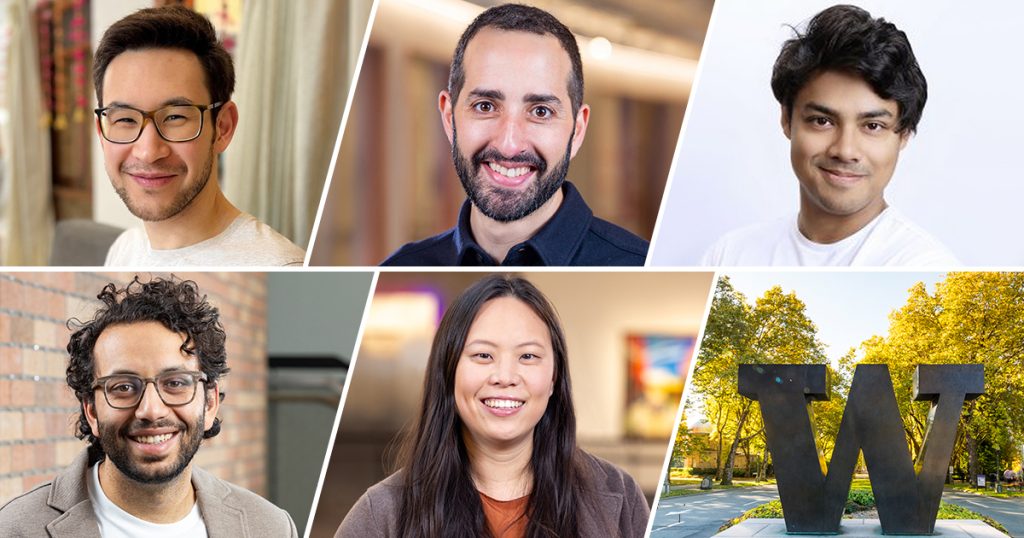
From left to right: NSF CAREER Award-winning faculty Andrea Coladangelo, Matthew Golub, Ranjay Krishna, Chinmay Nirkhe and Stephanie Wang.
For early-career researchers, a CAREER Award from the U.S. National Science Foundation (NSF) is both a prestigious honor and a significant source of support for advancing the state of the art in their respective fields. The five Allen School faculty members who are among this year’s awardees are shaping the future of computing on a variety of fronts, from designing new video-language models that can grasp subtle differences in movement, to understanding the neural mechanisms of learning to build artificial intelligence models that learn more like biological brains do — and more through projects spanning systems, cryptography and quantum computing.
Andrea Coladangelo: Quantum cryptography: Towards new functionalities and foundations
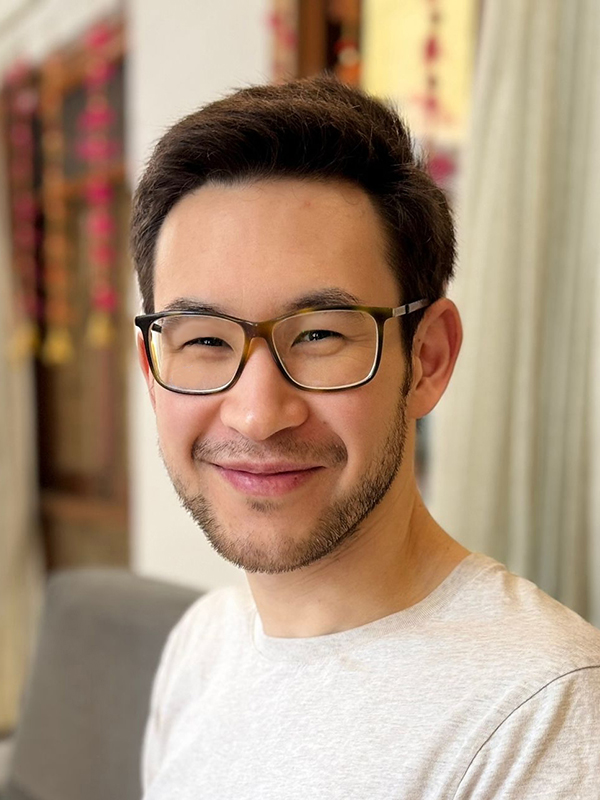
Andrea Coladangelo
Quantum computers have the potential to fundamentally change the field of cryptography, explained Allen School professor Andrea Coladangelo. By efficiently solving problems such as factoring and computing discrete logarithms, quantum computers threaten the security of today’s widely-deployed encryption schemes. Additionally, the ability to leverage quantum information opens the doors to realizing cryptographic functionalities that are not attainable with only classical capabilities.
With his CAREER Award, Coladangelo will investigate the interplay between quantum information and computational hardness, a key resource that powers virtually all of today’s cryptography. He proposes to develop new techniques that enable new cryptographic functionalities and forms of security — such as copy-protection of software, and ciphertexts that cannot be duplicated. Coladangelo will also investigate the computational hardness of inherently quantum problems as a new foundational resource for cryptography.
“One of the fascinating aspects of quantum information is that it enables forms of cryptography that are fundamentally impossible in the classical world,” said Coladangelo, who co-leads the Allen School’s Quantum Group.
“Over the next five years, the broad goal of this research is to advance our understanding of how uniquely quantum phenomena, such as entanglement and the uncertainty principle, can be leveraged to build entirely new forms of cryptography and to verify the capabilities of future quantum devices,” he continued.
Coladangelo is also interested in leveraging cryptographic techniques towards demonstrating quantum advantage. The term refers to a computational test that a quantum computer can verifiably pass efficiently, but a classical device cannot. With his research, Coladangelo aims to bring us closer to attaining this milestone in quantum computation.
Matthew Golub: Dissecting and guiding neural population mechanisms of learning
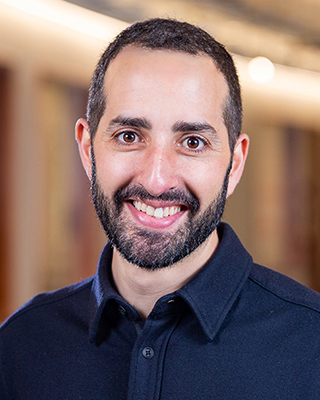
Matthew Golub
The ability to learn is crucial for both humans and AI. People learn how to reason, communicate and even recover skills after an injury. However, “as a field, we know remarkably little about the neural mechanisms that drive those changes in the brain — for example, how quickly they operate and how flexibly they can reshape neural activity,” explained Allen School professor Matthew Golub, who directs the Systems Neuroscience & AI Lab (SNAIL) at the University of Washington.
With his CAREER Award, Golub aims to understand how neurons change their coordinated firing activity during learning and develop ways to guide these learning processes to proceed more quickly and effectively.
Inside the brain, learning requires populations of neurons to modify their coordinated neural activity. A neural population’s activity is governed by inputs it receives as well as local recurrent dynamics. This means modifications to the inputs and local dynamics make up the two key population-level mechanisms of learning. Golub will investigate how neural circuits change over short-term versus multi-day learning, with a focus on the primary motor cortex. As part of this work, he is pioneering an approach that combines computational models of neural populations with brain-computer interface learning experiments in monkeys to establish a framework for identifying circuit-level mechanisms of learning.
By revealing the mechanisms that support learning in the brain, this research may improve methods for guided skill training, inspire the development of robust, efficient and interpretable AI systems that learn more like biological brains, and more.
“One of the long-term motivations for this work is neurorehabilitation: If we can understand why some patterns of brain activity are easy to change and others are difficult, we may be able to design better ways to help people recover skills after injury or disease,” said Golub. “This project is a step toward making learning in the brain something we can not only observe, but intentionally guide.”
Ranjay Krishna: Open and grounded video-language models
Ranjay Krishna
Videos can capture subtle distinctions in human action — say, a surgeon’s precise sutures or a dancer’s nuanced footwork — that video-language models may not be able to pick up on. Although modern AI systems excel at static visual tasks, they struggle with reasoning over dynamic long-form video such as tracking objects over time or explaining how events unfold.
Allen School professor Ranjay Krishna received a CAREER Award to develop a new class of open-source video-language models that can either match or go beyond the capabilities of today’s proprietary models. Compared to existing models that tokenize videos uniformly, only decode text and operate over fixed inputs, Krishna will tackle core technical limitations across tokenization, decoding and encoding.
“While video-language models can now recognize coarse events like a ‘basketball throw,’ they still struggle with fine-grained, meaningful actions like distinguishing a layup from a jump shot,” said Krishna, who co-directs the Reasoning, AI, and VisioN (RAIVN) Lab. “At its core, the research advances a new framework for temporal and spatial grounding — enabling models to track entities over time, understand causal interactions, and produce structured outputs such as trajectories, segmentations and event descriptions.”
As part of this work, Krishna proposes to introduce three innovations: a trajectory-based grounded video tokenization strategy, flexible encoder architectures for processing multiple videos at varying resolutions and a multimodal decoder for both spatial and textual outputs. These innovations will form the framework for understanding complex real-world video data and lead to new capabilities in few-shot reasoning, multi-video understanding and multimodal grounding.
Krishna’s research will enable video-based AI systems that can support practical applications in robotics, scientific analysis, education and more. For example, video-language models that can understand dynamic content are essential to assistive video analysis, such as describing surveillance footage or instructional videos, as well as embodied AI, which is where robots interpret and then act on visual instructions.
Chinmay Nirkhe: The computational complexity of many-body entanglement
Chinmay Nirkhe
Quantum many-body systems often exhibit entanglement, where particles become interconnected in a way that makes their quantum states impossible to describe independently. This entanglement pattern can make tasks such as predicting outcomes or certifying device behavior computationally prohibitive.
Using tools from theoretical computer science, Allen School professor Chinmay Nirkhe aims to further our understanding of the computational complexity of entanglement in many-body systems. His CAREER Award-winning project will focus on the description complexity of the ground states of local Hamiltonians. By mapping when these different states can be efficiently described, verified or cloned, Nirkhe seeks to identify the structural principles that govern complex entanglement in physically realizable systems.
“A central goal of quantum computation is to improve our understanding of many-body physics, including the quantum states that arise from local physical interactions,” said Nirkhe, who co-leads the Quantum Group. “We know that random quantum states are extraordinarily complex, but the states we care about in physics are not random; they are shaped by local physical interactions. The main question is whether this structure is enough to make them computationally simple.
“Indeed, in some special cases, this structure can be exploited to give efficient classical algorithms for approximate simulation and analysis. But local structure does not always imply computational simplicity, and some of my prior work demonstrates evidence for this,” he continued.
The insights gleaned from this project are expected to influence a variety of fields, from theoretical physics to engineering. For example, in quantum cryptography, hardness assumptions based on quantum phenomena can enable new forms of secure computation. With the growing capabilities of near-term quantum devices, whose behavior probes entanglement patterns that are classically intractable, Nirkhe’s research will become more and more timely.
Stephanie Wang: A distributed tensor runtime for fast, flexible, and scalable machine learning
Stephanie Wang
Today’s AI systems depend on distributed computing, where thousands of specialized chips work together to split up the math required to run extremely large models. However, as these models grow larger, it becomes increasingly difficult to coordinate both how these computations should be divided up and how data moves across machines.
Allen School professor Stephanie Wang will use her CAREER Award to bridge this gap by developing a new open-source software system that will enable these machines to run more efficiently and with more flexibility.
“The system is designed to adapt to changing conditions, such as varying workloads or hardware failures, while still maintaining high performance,” said Wang, who co-directs the UW’s SyFI Lab (Systems for Future Intelligence). “By making it easier to run complex artificial intelligence applications, this work will support the next generation of intelligent technologies in a reliable and efficient way.”
Her project will advance the design of distributed machine learning systems in two key areas. First, she seeks to develop a general purpose distributed execution engine for accelerators. Instead of isolating core system functions such as task scheduling, communication optimization and memory management into distinct software layers, the execution engine will unify and optimize them simultaneously.
Wang then will build off of this system to design a flexible programming model. By incorporating techniques such as just-in-time compilation, which translates source code while the program is running rather than prior to execution, the model will allow users to express a range of parallel execution strategies while enabling the system to employ both static and dynamic optimizations. Together, these components enable a unified distributed runtime to support diverse workloads with high performance across a variety of large-scale computing environments.
How can we harness the University of Washington’s research excellence and culture of collaboration to advance computing in ways that truly serve humanity?
Over the past year, Allen School researchers have coalesced around a grassroots effort to find out. They identified a set of grand challenges to which they would apply their deep expertise and engage a broad network of collaborators to advance innovation with the potential for significant societal impact.
First on the list: artificial intelligence. On the one hand, it has the potential to increase productivity and accelerate discovery, but on the other, it may lead to unintended consequences — especially for those who don’t fit the default user profile.
For the initial installment of a new Q&A series highlighting the grand challenges — and the researchers working on potential solutions — we spoke with professors Katharina Reinecke, whose research focuses on AI ethics and human-computer interaction, and Noah A. Smith, whose research at the Allen School and Allen Institute for AI (Ai2) centers around machine learning and natural language processing. Together with their colleagues across campus and beyond, they aim to answer the question, “How do we design AI in a way that is transparent and equally beneficial to all?”
If we want to understand and evaluate these systems, along with the problems and the assumptions that have gone into them — which will ultimately lead to better improved systems in future generations of the technology — we’ve got to have openness and transparency.
Noah A. SmithAllen School professor and UW vice provost for AI
The Transparent AI grand challenge emphasizes open source, open data and open processes as pillars of future AI tools. What should people expect these tools to look like in 10 or 15 years?
Noah A. Smith
Noah A. Smith: One way I think about what things could look like in 10 to 15 years is infrastructure that’s adaptable at a local scale, and I really like the analogy to open source software. Anyone should be able to change an AI system, track those changes, understand the consequences and experiment. It has to be a fully open stack — the data, the models, the training recipes, the evaluation, the processes — they’ll have to be open and reproducible.
What we have today is basically an interface where you can interact with an AI system. In the future, people will also need a fundamental knowledge and an understanding of how the systems work, and how the data affects what the model can do.
Katharina Reinecke: I totally agree, though even if some of the models remain closed, I think we can still achieve some kind of transparency. For example, we’ve been envisioning AI tools that might become much more open about their biases. We just published a paper in which we showed people a simple overview of these value biases that any model has, and when you make people aware of that, they actually become much more cautious about relying and over-relying on the AI. This neutrality assumption is always something that really bothers me, and I feel like that is something we can address even when the rest of the model remains closed.
What are some of these biases in AI models, and how can we address them?
Katharina Reinecke
KR: Most people think it’s all about the training data — if only we could have more diverse training data, then AI would be much better for everybody. But I actually think the biases come in already at a much earlier point. For example, the idea that AI should help us become more efficient, that’s a very Western idea in itself. In terms of structural barriers, there is the lack of diverse training data but I think it’s also just the lack of diverse viewpoints and experiences in tech companies who decide that there is a need for certain products.
NS: The tendencies and biases in these systems are partly due to the data, but not just the data. I can point to work from my lab about tokenization. It’s the very, very early stage where a language model takes text and breaks it into a sequence of pieces. It turns out that the way you break the text into pieces has a huge effect on the cost and the experience that people have, depending on what language and writing system they use. The ability to study and understand these kinds of biases is accelerated by the availability of open pipelines — it gives you many more lenses on the problem and potential solutions.
What are you most excited about with regard to the future of open and equally beneficial AI?
KR: I actually see that AI could have so many benefits, if only we let society play a role in shaping it. Many people really want to use AI. They see the benefit of it such as there’s all these medical cures that could happen, it could address climate change, all sorts of things. These are indisputably beneficial to society, but really figuring out how society can have a seat at the table to discuss what is being developed, how it is being developed, and why, as well as how it is being rolled out — that is a really exciting opportunity for research.
I actually see that AI could have so many benefits, if only we let society play a role in shaping it.
Katharina ReineckeAllen School professor
NS: I agree with these points about broader agency and giving communities and individuals the power to shape tools around their own needs and their own norms. I think that’s deeply linked to better science. I’m an AI scientist, and these things are artifacts worthy of scientific study. If we want to do that, if we want to understand and evaluate these systems, along with the problems and the assumptions that have gone into them — which will ultimately lead to better improved systems in future generations of the technology — we’ve got to have openness and transparency. Cultural responsiveness and open AI systems are deeply linked.
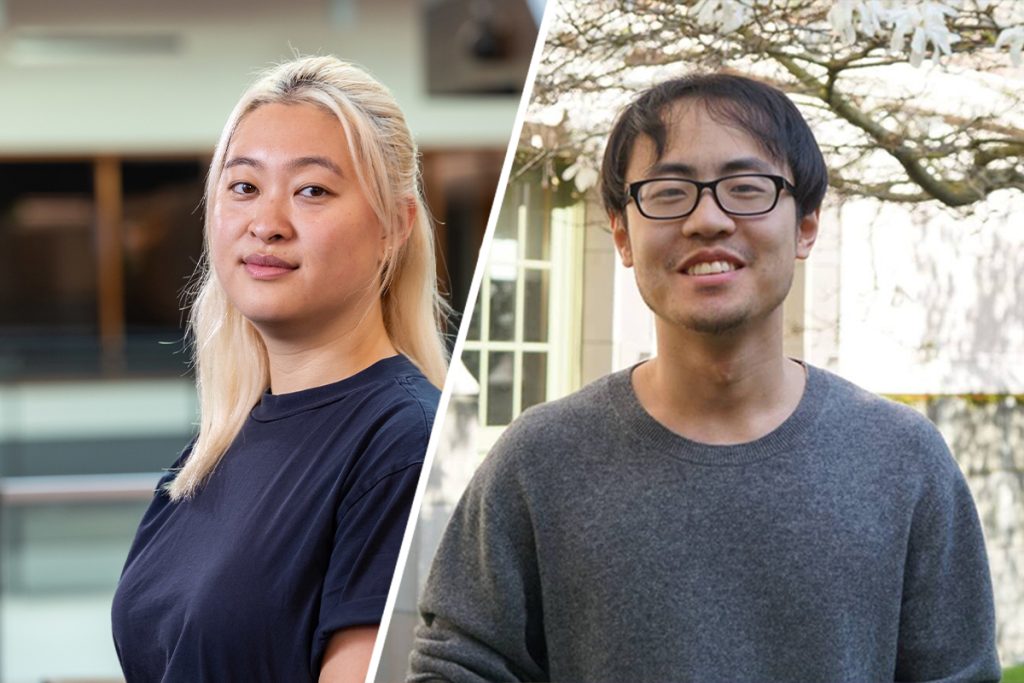
The Allen School has recognized alumni Miranda Wei (Ph.D., ‘25) and Chenzhi Zhu (Ph.D., ‘25) with 2025 William Chan Memorial Dissertation Awards, which honors outstanding doctoral dissertations and is named in memory of the late graduate student William Chan.
Wei and Zhu each tackled emerging digital threats as part of their dissertation research. As a member of the Allen School’s Security and Privacy Research Lab, Wei identified new methods for addressing online harassment and abuse. Zhu, a member of the Cryptography Group, introduced more secure techniques for generating digital signatures.
Miranda Wei: A sociotechnical approach to combatting online abuse
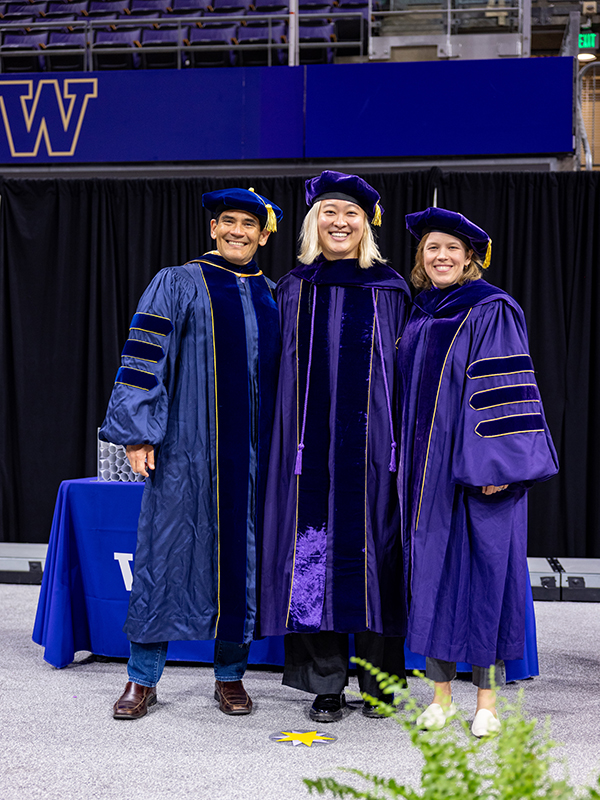
Miranda Wei (center) with her advisors Tadayoshi Kohno (left) and Franziska Roesner (right). (Photo by Matt Hagen)
From toxic social media content to image-based sexual harassment, technology-facilitated abuse (TFA) is a growing issue across the globe. However, across the current TFA mitigation landscape, prevention advice focuses on individual approaches. This puts an undue burden on those experiencing online harassment and abuse, explained Miranda Wei, currently a postdoctoral fellow at the Center for Information Technology Policy (CITP) at Princeton University and incoming faculty at the École Polytechnique Fédérale de Lausanne (EPFL) in Switzerland.
In her dissertation titled “Against Online Abuse and Toward Sociotechnical Security & Privacy,” Wei instead advocates for a sociotechnical approach to combat TFA, which integrates people’s lived experiences and social perspectives into computer security and privacy.
“One of the main challenges my dissertation aims to address is to demonstrate the broad range of security and privacy risks that people face, especially online abuse that was historically understudied in this field,” Wei said. “By using data from social media, and incorporating approaches from computer security and privacy like threat modeling (systemically modeling the attackers, their motivations, techniques, and what they’re targeting), my dissertation provides nuanced accounts of online abuse for security and privacy research.”
Wei applied sociotechnical threat modelling to characterize emerging forms of online abuse. For example, within relationship and parenting subcommunities on TikTok, creators share advice on how to surveil or control others. Their methods include tracking a target’s location using AirTags or obtaining their communications by hijacking social media accounts. The perpetrators’ motivations were shaped by social factors such as gender and even TikTok culture. By documenting these techniques, designers and developers can be more aware and anticipate these deeply personal motivations and how their apps and hardware can be misused.
She also found that sociotechnical approaches can also help researchers tackle the growing threat of students generating synthetic nonconsensual explicit imagery, or “deepfake nudes.” She interviewed middle and high school teachers to better understand the potential motivations for this form of TFA, as well as possible interventions in the school setting. Teachers anticipated that motivations would include gender and sexual abuse, “showing how interpersonal violence and trauma manifest in technologies ostensibly with non-abusive intentions,” Wei explained.
One of the main challenges my dissertation aims to address is to demonstrate the broad range of security and privacy risks that people face, especially online abuse that was historically understudied in this field.
Miranda Weipostdoctoral fellow at the Center for Information Technology Policy, Princeton University
As part of her work, Wei mapped out how researchers can use sociodemographic factors such as gender to measure differences in security and privacy behaviors. Through a survey of users in the U.S., Wei established that gender stereotypes surrounding computer security and privacy can negatively impact users. For example, participants believed that women were more likely to be gullible and emotional, as well as make poor security and privacy choices; they perceived men to be more engaged in the topic and more likely to take protective actions such as using two-factor authentication (2FA).
The lesson here, Wei says, is that researchers need to take such stereotypes into account when designing security tools.
“Miranda’s dissertation establishes her as a leader in the emerging field of sociotechnical computer security,” said Allen School professor Franziska Roesner, who co-advised Wei alongside former Allen School faculty member Tadayoshi Kohno. “In short, her dissertation sets a new bar for computer security dissertations that consider the human context.”
Chenzhi Zhu: Practical and efficient digital signatures for emerging applications
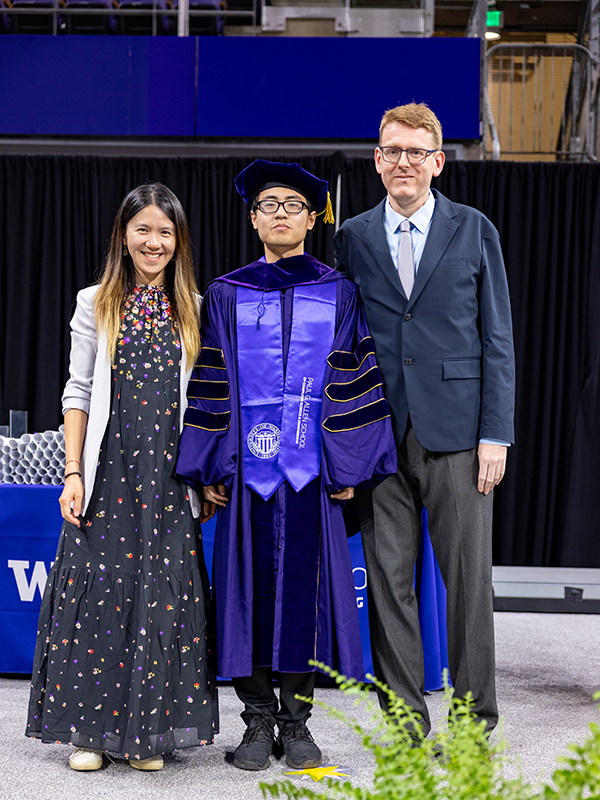
Chenzhi Zhu (center) with his advisors Rachel Lin (left) and Stefano Tessaro (right). (Photo by Matt Hagen)
Digital signatures are fundamental cryptographic tools used across multiple applications, from financial transactions to software distribution, to deter any forgery or tampering. While there are many efficient signature schemes with fast signing and verification, emerging scenarios such as digital wallets are requiring more and more advanced protocols for generating digital signatures.
Previous researchers have focused on blind signatures and threshold signatures. The former allows users to obtain signatures without revealing the messages or resulting signatures to the signer, while the latter distributes the secret signing key among multiple signers that interact to produce a valid signature.
In his dissertation titled “Efficient Blind Signatures and Threshold Signatures from Pairing-Free Groups and Lattices,” Chenzhi Zhu, now a postdoctoral fellow at the CIS Lab at NTT Research, builds on these approaches to design efficient cryptographic schemes in both pairing-free groups and lattices. Constructions in pairing-free groups are attractive for their compact key and signature sizes along with their well-established library support. On the other hand, lattice-based constructions are conjectured to remain secure even against quantum adversaries.
“The dissertation advances the frontier of practical constructions of threshold signatures and blind signatures based on pairing-free groups (elliptic curves), as well as lattice-based threshold signatures that provide post-quantum security,” said Zhu. “In particular, its results on threshold signatures have had a direct impact on recent standardization efforts.”
Zhu resolved a problem with blind signatures that had remained unresolved since the 1990s by introducing the first efficient and concurrently secure construction that is pairing-free. In particular, the scheme is provably secure under the discrete logarithm (DL) assumption in the algebraic group model (AGM) and the random oracle model (ROM). Unlike the prior insecure construction that relies on the hardness of the ROS problem, which was shown to be efficiently solvable, the security analysis of Zhu’s construction utilizes a new variant of the ROS problem, called weighted fractional ROS, which is proven to be unconditionally hard.
In addition to his work on pairing-free blind signatures, Zhu introduced a new syntax and security hierarchy for analyzing partially non-interactive threshold signatures such as FROST, a state-of-the-art threshold signature in pairing-free groups. His dissertation provides the first security proof for FROST in the ROM under the algebraic one-more discrete logarithm (AOMDL) assumption — showing that it achieves stronger security than previously considered. He further analyzed two other, more efficient FROST variants and found that they achieve weaker security than the original FROST in the hierarchy. His analysis of the original FROST now forms a core part of the ongoing FROST submission to the National Institute of Standards and Technology (NIST) threshold call.
The dissertation advances the frontier of practical constructions of threshold signatures and blind signatures based on pairing-free groups (elliptic curves), as well as lattice-based threshold signatures that provide post-quantum security.
Chenzhi Zhupostdoctoral fellow at the CIS Lab at NTT Research
Zhu’s work also has shaped the growing line of research on post-quantum secure threshold signatures from lattices. Previous lattice-based constructions were either based on heavy cryptographic tools — such as fully homomorphic encryption — that leave these schemes impractical, or relied on non-standard assumptions. He established the first security analysis for a state-of-the-art two-round lattice-based threshold signature scheme that does not rely on any heavy tools under standard lattice assumptions. The result further influenced the Tanuki and Hermine submissions to the NIST threshold call, in which they both rely on Zhu’s analysis to establish security under the standard assumptions.
“Chenzhi’s dissertation made important contributions to a highly active area of cryptography, developing rigorous foundations for mechanisms with broad relevance across modern digital infrastructure,” said Stefano Tessaro, who co-advised Zhu alongside colleague Rachel Lin. “What sets his work apart is the rare combination of theoretical depth, conceptual clarity, and practical impact, with results that have already influenced standardization efforts and shaped subsequent work in both academia and industry.”
Many software tools, including compilers, optimizers and synthesizers, all depend on a common core to transform long and complicated programs into a simplified equivalent. This pattern stretches across a variety of problems, from shrinking three-dimensional CAD models to optimizing SQL queries.
Allen School professor Zachary Tatlock
Previously, each problem required developing an ad hoc and application-specific search strategy. But then a team of researchers led by Allen School professor Zachary Tatlock, including his former postdoc Max Willsey (Ph.D., ‘21) and current Ph.D. student Oliver Flatt, came up with a novel approach that could be generalized and reused across a variety of situations — allowing developers to focus on optimization and efficiency.
The researchers introduced egg, an open-source library that uses e-graphs, or equality graphs, along with equality saturation to optimize term representations. Since its release, egg has inspired the emergence of an entire community, with annual workshops, multiple follow-up papers and industry adoption. The team’s paper “egg: Fast and Extensible Equality Saturation” was recently selected as a Communications of the ACM (CACM) Research Highlight, which recognizes outstanding research with strong, novel contributions to the field and broad interest to the computing community.
“What’s remarkable about the egg project is how quickly it went from a research idea to a wide-ranging toolkit,” said Tatlock, who holds the Paul G. Allen Career Development Professorship in the Allen School. “In just a few years, it’s been adopted across domains from deep learning to hardware design. We’re seeing 50x speedups in neural network optimizations, 63% smaller hardware circuits, and even production compilers being rebuilt around e-graphs.”
While equality saturation and e-graphs were in use before egg’s introduction, the researchers introduced two new techniques to make this approach fast and extensible — amortized invariant maintenance and e-class analyses. The former, a new amortized invariant restoration technique called rebuilding, loosens the e-graph’s data structure invariants and only enforces them at the right time to make them run muchfaster. The latter makes e-graphs more flexible by allowing users to bring program analyses such as constant propagation into the e-graph environment, reducing the need for ad hoc manipulations.
By making equality saturation practical, egg essentially gave everyone a powerful new hammer — and it turns out many nails were waiting.
Zachary TatlockAllen School professor
Already, egg has been applied broadly and re-implemented across the tech industry. For example, hardware engineers at companies such as Intel have adopted e-graph rewriting to improve their chip design. In the field of numerical computing, researchers were able to integrate egg into parts of Herbie, a tool for reducing floating-point error, making it 3,000 times faster.
“By making equality saturation practical, egg essentially gave everyone a powerful new hammer — and it turns out many nails were waiting,” Tatlock said.
The egg research team is made up of current or former members of the University of Washington’s Programming Languages and Software Engineering (PLSE) group. Additional authors include Allen School alumni Chandrakana Nandi (Ph.D., ‘21), Allen School affiliate faculty member and director of U.S. R&D at Certora; Yisu Remy Wang (Ph.D., ‘23), faculty at University of California, Los Angeles; and Pavel Panchekha (Ph.D. ‘19), faculty at University of Utah.
In his award-winning paper, Allen School professor Jerry Li resolved a longstanding issue in robust statistics.
In 2019, a team of researchers including Allen School professor and alum Jerry Li (B.S., ‘13) proved that a broad class of high-dimensional statistical problems can be both efficiently and robustly solved, even when some of the data has been corrupted. The result, described in the groundbreaking paper “Robust Estimators in High Dimensions without the Computational Intractability,” solved a foundational problem in robust statistics that had remained open since the 1960s — and transformed the field in the process.
“The suite of techniques that the paper introduced have now become the cornerstone of a subfield called ‘algorithmic robust statistics,’ and the community has been able to use them to obtain robust estimators for many settings beyond the original paper in statistics, theoretical computer science, and machine learning,” Li said.
At the International Colloquium on Automata, Languages, and Programming (ICALP 2026) last month, Li and his collaborators were awarded the 2026 Gödel Prize for their landmark work. The prize, named for mathematician and logician Kurt Gödel, recognizes outstanding papers in theoretical computer science. “The paper fundamentally changed our understanding of what is algorithmically possible in robust high-dimensional learning,” the award committee wrote.
Prior to this work, researchers struggled with a tradeoff. “All previously known algorithms were either computationally intractable, or their estimators gave useless error guarantees in high dimensions,” Li explained. This meant that in high-dimensional settings with datasets containing thousands of variables, algorithms could either be robust or computationally efficient.
Instead, Li and his collaborators showed that it was possible to achieve both. The researchers introduced the first algorithm for basic estimation problems in high dimensional settings, such as learning the mean of a distribution, that was computationally efficient and also achieves the right statistical guarantees in the presence of a small fraction of potentially arbitrary outliers.
The suite of techniques that the paper introduced have now become the cornerstone of a subfield called ‘algorithmic robust statistics.’
Jerry LiAllen School professor
Their results have helped researchers obtain reliable estimators in both theoretical and real-world settings. For example, modern high-dimensional datasets such as those containing medical or financial data can often contain corrupted or unreliable entries from measurement errors, outliers or other issues. Alongside their algorithm, the researchers also developed a broader framework for both detecting and filtering corrupted data.
Li completed this work while a Ph.D. student at the Massachusetts Institute of Technology and intern at Microsoft Research Cambridge. Additional authors include Ilias Diakonikolas, faculty at University of Wisconsin-Madison; Gautam Kamath, faculty at the University of Waterloo; Daniel Kane, faculty at the University of California San Diego; Ankur Moitra, faculty at MIT; and Alistair Stewart, postdoc at the University of Southern California.
The Gödel Prize is awarded annually by the European Association for Theoretical Computer Science and the ACM Special Interest Group on Algorithms and Computation Theory.
Chinmay Nirkhe is part of both the Allen School’s Theory Group and the Quantum Group.
A team of researchers including Allen School professor Chinmay Nirkhe has resolved one of the biggest open problems in quantum complexity theory of the past 20 years: are quantum proofs computationally more powerful than classical proofs? To prove this, the researchers identified a query complexity problem that can be verified with a short quantum proof but for which “no classical proof can provide the same advantage without requiring exponentially many queries or an exponentially long proof,” Nirkhe explained.
Their results earned the researchers a Best Paper Award at the 58th Annual ACM Symposium on Theory of Computing (STOC 2026) in Salt Lake City, Utah, last month.
The result gives strong evidence that quantum proofs are not just different encodings of classical proofs; they can be fundamentally more powerful computational objects.
Chinmay NirkheAllen School professor
The problem that Nirkhe and his collaborators identified is called the spectral forrelation problem, which compares various ways of measuring a quantum state. In this problem, you are given a pair of shadows and must figure out if they could have come from distinct measurements of the same state. The team’s paper titled “Separating QMA from QCMA with a classical oracle” proved that two classes of computation problems — QMA, which includes all problems with quantum proofs, and QMCA, for those with classical proofs that a quantum computer can also check — are different.
To solve the problem, the team introduced a series of new techniques drawing on ideas from physics and other areas of computer science. This includes a novel reduction from verification problems to sampling problems that exploits the unclonability of quantum information. They also developed a new method for analyzing quantum algorithms over random distributions using the mathematics of quantum particles called bosons.
“The result gives strong evidence that quantum proofs are not just different encodings of classical proofs; they can be fundamentally more powerful computational objects,” said Nirkhe, who is part of both the Allen School’s Theory Group and the Quantum Group. “It also points to what I think is the next interesting direction: understanding the computational or cryptographic utility of unclonability — the fact that quantum information cannot be freely copied — and when this uniquely quantum feature can be turned into provable computational utility.”
Additional authors include John Bostanci, researcher at the Simons Institute for the Theory of Computing at the University of California, Berkeley; Jonas Haferkamp, faculty at Ruhr-University Bochum; and Mark Zhandry, faculty at Stanford University.
Allen School professor Noah A. Smith was recognized for his groundbreaking contributions across the entire NLP stack.
Allen School professor Noah A. Smith is steering AI to be a tool that benefits us all. From introducing new methods to predict linguistic structure to developing open and transparent AI models, Smith, who is also senior director of Natural Language Processing (NLP) Research at the Allen Institute for Artificial Intelligence (AI2), has helped develop the groundwork for modern NLP research while also pushing the field into the future.
Smith currently serves as the University of Washington vice provost for artificial intelligence overseeing strategy around AI across the University’s mission. As part of the 2026 UW Awards of Excellence, Smith was recently honored with the University Faculty Lecture Award. Since 1976, the award has celebrated faculty, who are widely recognized by their peers, with influential contributions to both their field and society as whole. As part of the award, Smith will deliver the annual University faculty lecture to share his outstanding research and creativity with the greater UW community.
“In my research, I target algorithms that process data encoding language, music, and more, to augment human capabilities,” said Smith, who is also the inaugural Charles and Lisa Simonyi Endowed Chair for Artificial Intelligence and Emerging Technologies in the Allen School.
Over the past 25 years, Smith’s research has helped shape the field of NLP by asking how AI systems represent and learn language, how their behavior should be evaluated, and what kinds of infrastructure are needed for open and cumulative science. His early work made influential contributions to structured prediction, multilingual NLP and computational semantics. This includes practical methods for parsing and techniques such as retrofitting, which improves word representations by bringing together expert knowledge with text data. As NLP shifted toward neural and large-scale models, Smith’s work continued to advocate for the importance of rigorous evaluation and transparent scientific practice.
In my research, I target algorithms that process data encoding language, music, and more, to augment human capabilities.
Noah A. SmithAllen School professor and senior director of NLP Research at AI2
Beyond building the foundations for NLP research, Smith is also interested in guiding the responsible use of AI and its applications to computational social sciences. To that end, Smith has evaluated what AI systems can measure and how model behavior changes across social, cultural and linguistic contexts. For example, he and his collaborators found that AI systems can reproduce or even amplify gender biases in machine translation and racial biases in hate speech detection. Smith has also led the charge in applying NLP to social media analysis, including the development of a large-scale dataset derived from Reddit for text-based recommenders. The goal is to enable researchers to better understand the systems that affect online user interactions.
“Noah’s work is nothing short of groundbreaking. He’s not just a brilliant mind in AI; he’s a force for good, pushing for a future where technology lifts us all up,” said Allen School professor emeritus Oren Etzioni.
Most recently, Smith has focused on developing open AI infrastructure: the models, datasets, benchmarks and pipelines needed to make advanced AI systems scientifically legible. Through efforts such as the fully open language model OLMo, Smith has driven the field toward more accessible AI systems that can be evaluated, improved and governed outside of the confines of industry labs. The success of OLMo led to a grant from the National Science Foundation (NSF) and NVIDIA to support the Open Multimodal AI Infrastructure to Accelerate Science (OMAI) project, the first fully open set of AI tools to accelerate scientific discovery — with Smith and Allen School professor and senior director of AI at AI2 Hanna Hajishirzi serving as principal investigator and co-principal investigator, respectively.
The University Faculty Lecture Award is the latest accolade Smith has received celebrating his work. He has been recognized with an Amazon Professorship, NSF CAREER Award and a UW Innovation Award. Smith is a Fellow of the Association for Computational Linguistics, and he also co-led the UW Sounding Board team which won the inaugural Amazon Alexa Prize.
Each year, the Allen School recognizes outstanding former students with exceptional records of achievement with the Alumni Impact Award. This year’s honorees David Dawson (B.S., ‘06) and Nodira Khoussainova (Ph.D., ‘12) have combined their computing skillset with their entrepreneurial spirit to build companies that are making a positive impact in people’s lives.
“David and Nodira are exceptional role models for our graduates. They demonstrate how you can bring the technical skills unique to a computing education to bear on matters of community and societal well being that we can all relate to,” said Dan Grossman, professor and vice director of the Allen School. “Their passion as entrepreneurs springs from this through line from technical problem solving to finding important issues others have overlooked.”
Dawson and Khoussainova will be formally honored at the 2026 Allen School graduation celebration on June 12 — showcasing to a new class of alumni what can be accomplished with an Allen School education.
David Dawson (B.S., ‘06): Building meaningful startups with the “right mix of mission, people and opportunity.”
David Dawson
David Dawson got his start in technology and entrepreneurship in high school building websites for local businesses. Since then, his career has been defined by a series of technical co-founder and early engineering roles at multiple Pacific Northwest startups. Along the way, he worked with members of the Seattle technology community — including many fellow Allen School alumni — who would go on to become lifelong collaborators, with the goal of building technologies that make a difference.
“One of the things I love about getting a company going from the ground up and building relationships with people who are also trying to create this thing that doesn’t exist is that it taps into an optimism and passion that keeps you going,” Dawson said.
After graduating from the Allen School, Dawson followed some of his University of Washington alumni to Zillow as one of the company’s first software engineers. The experience was his “first foray into starting something more from scratch” where he learned the ins and outs of startup life and how to creatively solve problems. That skillset helped him co-found his next two business ventures — a loyalty rewards program called Stash Hotel Rewards that helps independent hotels compete with larger chains, and Leah’s Kitchen, a dinner delivery service that makes home cooked meals more accessible for busy families. While each startup had vastly different focuses, Dawson said each one brought together the “right mix of mission, people and opportunity.”
The seeds of resilience that I’ve been able to build over the years really started there at the Allen School, where I learned that it’s okay to fail some and pick yourself up and ask for help.
David DawsonCo-founder of Ridwell
In 2018, Dawson co-founded Ridwell, a subscription service that makes it easier for households to recycle items that can’t be easily recycled curbside with the goal of building a future without waste. The company takes in items such as multilayer plastics, styrofoam, light bulbs and electronics and transports them to local partners who specialize in giving the materials a second life to keep them out of landfills. Ridwell began as CEO Ryan Metzger and his son driving around North Seattle collecting hard to recycle items from neighbors, and Dawson offered to help on the technology side. Along with two other co-founders, they turned the mailing list of Seattle neighborhoods to a subscription recycling business that spans more than 150,000 customers across the country. While Dawson has stepped aside as the company’s head of engineering, he still maintains an advisory role.
Dawson credits his time at the Allen School with giving him the skillset, mentorship and opportunities to help his career grow.
“The seeds of resilience that I’ve been able to build over the years really started there at the Allen School, where I learned that it’s okay to fail some and pick yourself up and ask for help,” said Dawson. “The instructors, professors and advisers who helped me find my way — I’m only starting to appreciate it now, but these connections and people are what matters when you think about going out and getting a job and doing great things.”
Next, Dawson is focused on helping everyday builders in his community use artificial intelligence to bring their ideas to life. That includes collaborating with his wife (a fellow Husky) to grow her coaching business and working with other colleagues on smaller, AI-driven projects.
Nodira Khoussainova (Ph.D., ‘12): Developing technology that protects human attention instead of stealing it
Nodira Khoussainova
Nodira Khoussainova, CEO and co-founder of the online social coworking platform Focused Space, is doing something that feels almost countercultural these days: building a company whose entire purpose is the protection of human attention.
“The most important work that’s happening in the tech industry right now involves protecting human attention instead of stealing it, and creating space for authentic human connection instead of just chasing engagement metrics,” Khoussainova said.
That clarity of purpose was first shaped during her time at the Allen School, where she was advised by professors Magdalena Balazinska and Dan Suciu of the UW Database Group. She said that Balazinska taught her the basis of systems thinking and how to look at a problem and break it down into a system of interconnected parts and constraints. For Khoussainova, that’s a skill she uses every day as a founder, since “running a company is basically a systems problem.” From Suciu, she learned what she describes as “principled thinking,” or digging deep into issues and pushing against one’s own assumptions, which has shaped how she evaluates ideas and makes decisions. In the labs and hallways of the Allen School, Khoussainova said she also learned that technology is only as meaningful as the humans it serves.
“At the Allen School, there’s this deep sense of responsibility and thoughtfulness about the impact technology is having on society,” Khoussainova said. “It was in the air. I was living and breathing that culture. It’s why I’m building the technology I’m building.”
After completing her Ph.D., Khoussainova went deep into industry. She co-founded Streamlit, a developer tool for AI and machine learning engineers that was later acquired by Snowflake, and led the experimentation team at X (formerly Twitter). She was at the frontier, watching up close how technology was reshaping human behavior and affecting people’s mental health.
In 2021, Khoussainova co-founded Focused Space, which helps creatives, entrepreneurs and academics concentrate on their work and achieve their goals through “body doubling.” Body doubling is a technique where people work alongside one another, such as in a coffee shop or an online video space. It helps a person sit down and focus on tasks they have been meaning to finish.
She created the company initially for herself as a passion project. “I’ve always been someone who cares deeply about my work, and I love the state you get into when you can really lock in, but it’s really hard to put aside all distractions,” explained Khoussainova.
Once she saw the impact she was having on people’s lives — members getting dream jobs, publishing books and launching businesses — she doubled down on the vision. Khoussainova brought on her two co-founders: Justin Trobec from X and fellow UW alum Alexis Hope, a product designer whose work centers on helping people find joy, self-compassion and connection with others.
At the Allen School, there’s this deep sense of responsibility and thoughtfulness about the impact technology is having on society.
Nodira KhoussainovaCEO and co-founder of Focused Space
The platform is especially helpful for users who are neurodivergent, such as the growing number of adults with attention deficit/hyperactivity disorder (ADHD), and those who work remotely. Focused Space offers more than 100 expert-facilitated online body doubling sessions throughout the work week across multiple time zones, and provides other tools for goal setting, productivity and more. For example, the company also partners with a network of therapists, coaches and educators who offer workshops on topics such as stress management. Focused Space recently went public in the Apple App Store and launched its own social video platform.
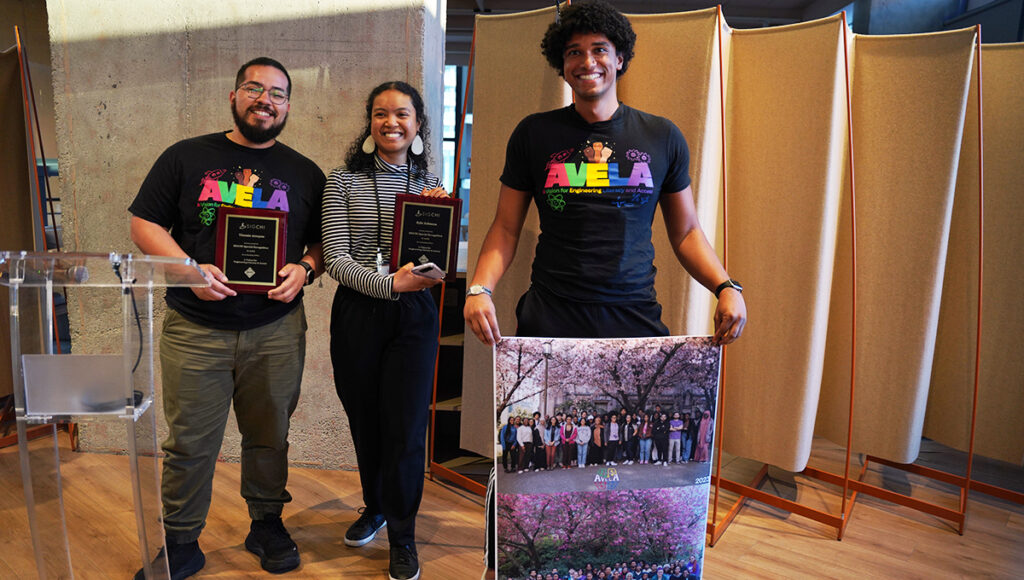
Allen School Ph.D. student Vicente Arroyos, Allen School professor Leilani Battle and Allen School Ph.D. student Kyle Johnson accept the SIGCHI Special Recognition for AVELA’s mentorship program.
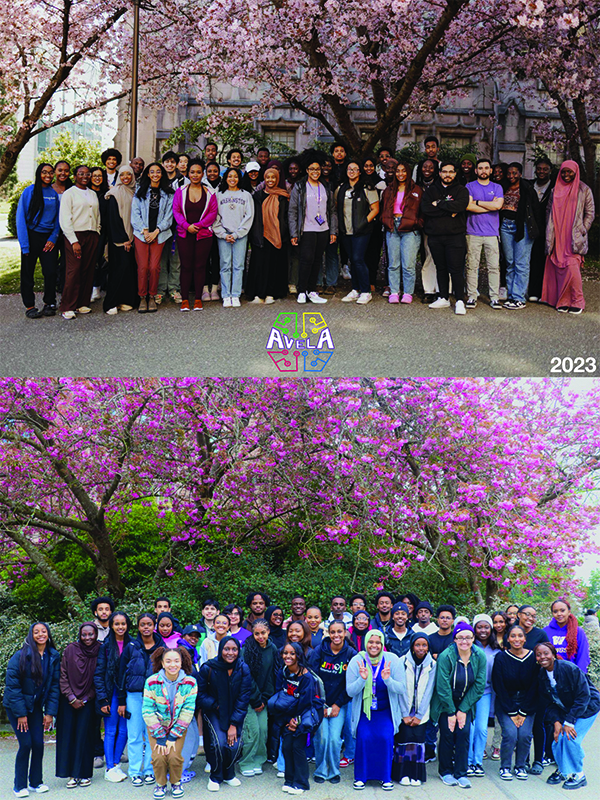
University of Washington student group AVELA – A Vision for Engineering Literacy & Access is making STEM education more accessible to more students. The organization provides free courses and workshops for kindergarten to high school students in topics such as artificial intelligence, virtual reality and robotics, while pairing learners with college, graduate and professional mentors.
At the ACM CHI Conference on Human Factors in Computing Systems (CHI 2026) in April, AVELA co-founders and Allen School Ph.D students Vicente Arroyos and Kyle Johnson received a SIGCHI Special Recognition “for building an impactful mentorship ecosystem that empowers thousands of underrepresented youth and strengthens community-rooted STEM learning and workforce development.”
We recently spoke with Arroyos and Johnson to learn more about AVELA and their work.
What is AVELA?
Vicente Arroyos: AVELA started out here at the University of Washington as a student organization in 2019, and grew into a 501(c)3 nonprofit in 2022, but our mission is still the same. We are a STEM outreach organization that uses mentorship to provide STEM experiences to youth, whether that be in industry or in research fields.
Kyle Johnson: AVELA’s model is built around multi-tiered near-peer mentorship. Graduate students mentor undergraduates early in their academic and professional journeys, helping them build technical skills through hands-on, research and community-driven projects. Those undergraduates then translate what they’re learning into engaging lesson plans, workshops and resources that bring emerging areas of computing and engineering to elementary, middle and high school students. Our programs are designed to reach youth who are furthest from educational equity, so we work a lot with students who are first generation, low income as well as those from historically marginalized backgrounds.
Using their talent, energy and leadership, AVELA students are creating measurable changes across the state.
Vicente ArroyosAllen School Ph.D. student
How many students has AVELA worked with?
VA: Since we founded the organization in 2019, AVELA has supported over 500 college instructors in mentoring more than 7,000 K–12 students, delivering more than 125,000 hours of STEM instruction. Between 2024 to 2025 alone, we supported 150 unique college instructors across 77 classrooms in leading 30,419 hours of learning to 2,101 secondary students. This impact would not be possible without our student members. Using their talent, energy and leadership, AVELA students are creating measurable changes across the state.
KJ: I want to highlight the 125,000 hours of STEM instruction, because it shows the depth of AVELA’s engagement with students. When you divide those hours across more than 7,000 students, it comes out to nearly 18 hours of mentorship per student. That is enough time not only to teach technical skills, but to build trust, talk about college and career pathways and support students beyond the project itself. I often say that 50% of the work is STEM education, and the other 50% is life and career mentorship.
How does AVELA choose what kinds of topics to teach to students?
The SIGCHI Special Recognition also honors the efforts of other AVELA student members who help make the organization’s workshops and mentorship programs possible.
VA: Personally, I had few chances to explore the topics I was interested in as a secondary student, and it was a handful of early opportunities that gave me my first real exposure and sparked that flame. That’s why our priority is letting the students guide the topics.
Today, we’ve expanded well beyond the content we started with. We began with engineering, since that was the interest of our founding group, but as students came through we grew into health-related fields and beyond because the interest was there, from both the K–12 students and the undergrads at the time.
KJ: AVELA’s programming has always evolved with student interests. Most of our projects start when students come to us excited about an emerging technology. That was true with chatbots and AI: before ChatGPT was released in 2022, students were already asking how these systems worked. So in 2021 and 2022, we were building lessons around AI and machine learning because that was what students wanted to learn.
Now, students are excited to work on projects related to microrobotics, quantum computing and extended reality, but they are not stopping at the technology itself. They are going back into their communities, identifying real problems and asking how these tools can be used to solve them.
What is next for AVELA?
VA: There’s been a start in getting mentors going across the nation, but currently we’re still mainly in the greater Seattle area. It’d be great to see the organization and what has been built here be replicated in other cities.
KJ: We don’t have a shortage of undergraduates who want to do this work, nor a shortage of community partners who want them in their classrooms. The challenge has always been building enough buy-in from faculty and professional mentors to support them. Greater mentorship involvement, especially through grants that fund undergraduate roles, would allow AVELA to reach more students with higher quality, and more frequent, lessons. There are many bright students ready to contribute, but expanding access means providing these students meaningful, paid opportunities to grow.
Students are excited to work on projects related to microrobotics, quantum computing and extended reality, but they are not stopping at the technology itself. They are going back into their communities, identifying real problems and asking how these tools can be used to solve them.
Kyle JohnsonAllen School Ph.D. student
In addition to Arroyos and Johnson, fellow AVELA co-founder Liban Hussein, who graduated from the UW Department of Electrical & Computer Engineering and is now at Boeing, also received a SIGCHI Special Recognition.