
Alumni News
The Allen School’s Alumni News features stories and updates that celebrate the achievements and experiences of our alumni.
-
October 7, 2026 -
UW News
Allen School Ph.D. student Yael Eiger and professor Franziska Roesner discuss their research examining people’s experiences with technology during and after incarceration and the broader impacts of technology used for policing and post-release monitoring.

-
October 2, 2026 -
Allen School News
In their 2017 paper, Roesner and her co-authors were among the first to investigate end-user security and privacy perspectives on then-emerging smart home technologies and recommend ways to help users make more informed security decisions.
-
September 1, 2026 -
Allen School News
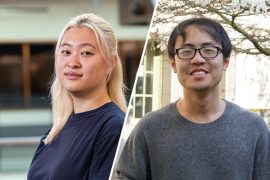
Allen School faculty recognized 2025 alumni Wei and Zhu for their outstanding doctoral dissertation research identifying new methods for tackling online harassment introducing more secure techniques for generating digital signatures, respectively.

-
August 27, 2026 -
GeekWire
Allen School alum Cory Black (B.S., ‘18) left a career in tech behind when he literally ran off to join the circus. Now a full-time soccer freestylist, he recently took home the bronze medal from the International Jugglers’ Association Championships.
-
August 26, 2026 -
Science World
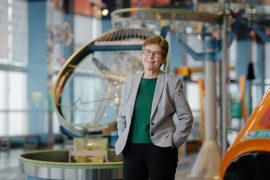
Murphy (Ph.D., ‘96), professor and former Vice-President Research and Innovation at the University of British Columbia, will lead the Vancouver, BC organization’s efforts to engage learners in STEAM (science, technology, engineering, art & design and math).

-
August 13, 2026 -
Allen School News
Researchers in the Programming Languages & Software Engineering (PLSE) group introduced egg, an open-source library that uses e-graphs along with equality saturation to optimize term representations. Their paper was recently featured as a Communications of the ACM Research Highlight.
-
August 5, 2026 -
Allen School News
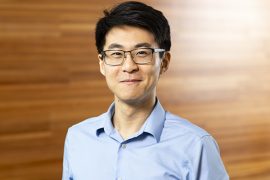
Li (B.S., ‘13) and his collaborators received the award for resolving a foundational problem in robust statistics, proving that a broad class of high-dimensional statistical problems can be both efficiently and robustly solved, even when some of the data has been corrupted.
-
June 30, 2026 -
UW News
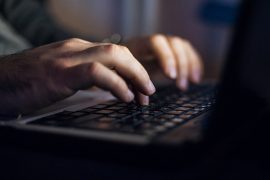
Professors David Kohlbrenner and Franziska Roesner (Ph.D., ‘14) of the Allen School’s Privacy & Security Research Lab found that browser agents are susceptible to cyberattacks by violating the same-origin policy, a cornerstone of modern web security that has safeguarded users for 30 years.

-
June 12, 2026 -
Allen School News
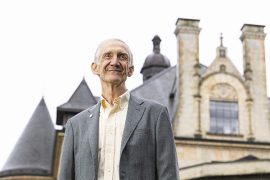
Dawson and Khoussainova, the 2026 Alumni Impact Award recipients, have combined their computing skillset with their entrepreneurial spirit to build companies that are making a positive impact in people’s lives.
-
June 11, 2026 -
Allen School News
The award, which is based on nominations from University of Washington alumni, honors “UW educators whose profound influence continues to shape the lives of their students long after they’ve left the classroom.”