Our study of the theoretical foundations of computing spans algorithm design and analysis, complexity, optimization, cryptography, quantum computing and more.
We seek to answer fundamental and long-standing questions about the capabilities and limitations of our field, which has practical implications in economics, logistics, social welfare, transportation and many other real-world domains.
The Theory of Computation Group makes progress on fundamental problems in computer science, including algorithms, optimization, cryptography, quantum and more, to understand and expand the limits of the field.
The Quantum Group does research on a variety of topics in quantum information and computation (primarily on the theory side), including quantum complexity theory, error-correction, cryptography, algorithms, and learning.
IFDS organizes its research around four core themes: complexity, robustness, closed-loop data science, and ethics and algorithms. By making concerted progress on these fundamental fronts, IFDS aims to lower several of the barriers to better understanding of data science methodology and to its improved effectiveness and wider relevance to application areas.
The eScience Institute empowers researchers and students in all fields to answer fundamental questions through the use of large, complex, and noisy data. As the hub of data-intensive discovery on campus, we lead a community of innovators in the techniques, technologies, and best practices of data science and the fields that depend on them.
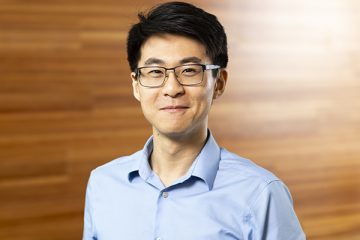
Li (B.S., ‘13) and his collaborators received the award for resolving a foundational problem in robust statistics, proving that a broad class of high-dimensional statistical problems can be both efficiently and robustly solved, even when some of the data has been corrupted.
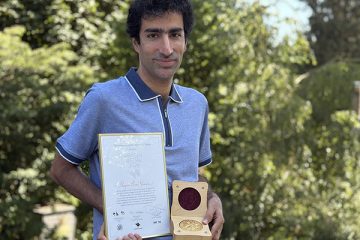
The medal from the International Mathematical Union recognizes a researcher under the age of 40 who has made outstanding contributions in the mathematical aspects of the information sciences.
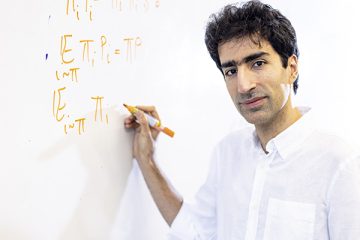
Shayan Oveis Gharan, a professor in the Allen School’s Theory of Computation Group, received the 2026 IMU Abacus Medal from the International Mathematical Union for landmark contributions to the theory of algorithms.